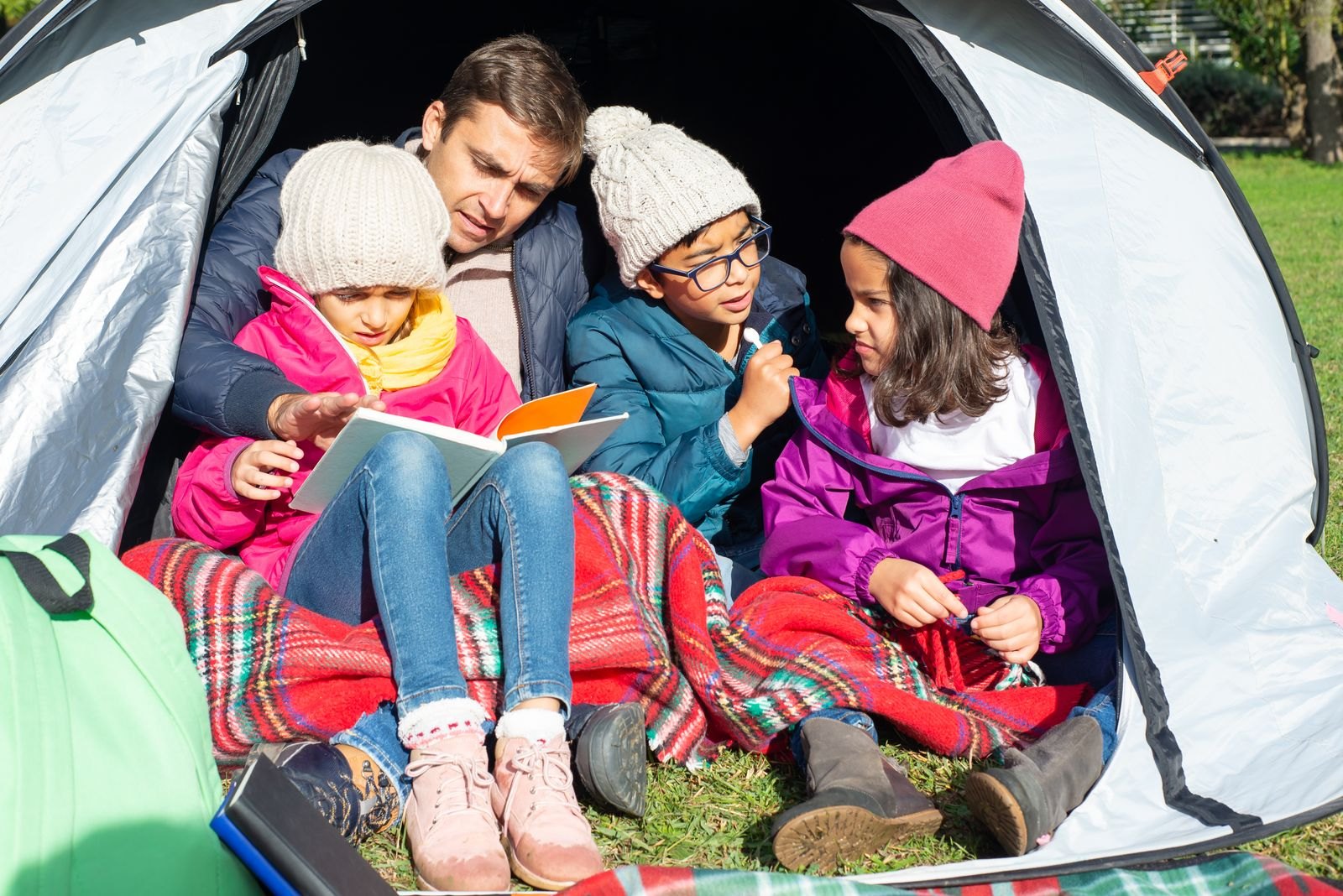
A first family camping trip does not need a remote location and unfamiliar equipment to feel adventurous. Choose a suitable established campground with the facilities your family needs, and keep the first stay short enough to adjust if the experience differs from what you imagined.
Read the campground's current information about reservations, weather, water, toilets, food storage and local hazards. A campsite category or photograph may not reveal the conditions that matter to your children. Know the rules before arrival rather than expecting to solve every detail at the gate.
Test the equipment before the trip
Put up the tent and check that all parts are present. Learn how doors, ventilation and rain protection work, and follow the manufacturer's instructions. A practice setup gives adults a chance to discover missing pieces without supervising tired children in a new place at the same time.
Choose sleeping arrangements appropriate to each person and the expected conditions. Babies require their own suitable safe sleep setup; an adult sleeping bag, air mattress or improvised padded corner is not an equivalent substitute. If you cannot provide the necessary arrangement, choose a different kind of accommodation or postpone that version of the trip.
Reduce the number of new tasks
Bring familiar meals that you can store and prepare safely with the equipment available. A complicated first attempt at outdoor cooking can consume the evening. Follow local food-storage rules, particularly where wildlife is a concern, and maintain safe temperatures for perishables.
Never use fuel-burning stoves, grills or heaters inside a tent or other enclosed sleeping space. Follow equipment instructions and local restrictions, and keep children supervised around any cooking or fire area. A campfire is optional; it is not necessary for the trip to count as camping.
Give the campsite clear boundaries
Explain where children may go and which adult is supervising. Identify relevant hazards such as water, roads or steep ground, and choose a site that works with the supervision you can provide. Have a plan for the bathroom journey after dark, with appropriate lighting kept accessible.
Tell a trusted person your plan and know how to get help in the area. Do not assume mobile service will be available everywhere. Check the weather again before departure and be willing to change the trip when conditions are unsuitable.
Leave room to learn
The first outing may reveal that packing takes longer, bedtime works differently or the family prefers a different site layout. Note those details without treating the trip as a test you must pass. Returning home early can be the right decision.
A successful first camp leaves you with useful experience and a clearer idea of what to change. It does not require adding a long hike, elaborate meal and every traditional camping activity to the same short stay.