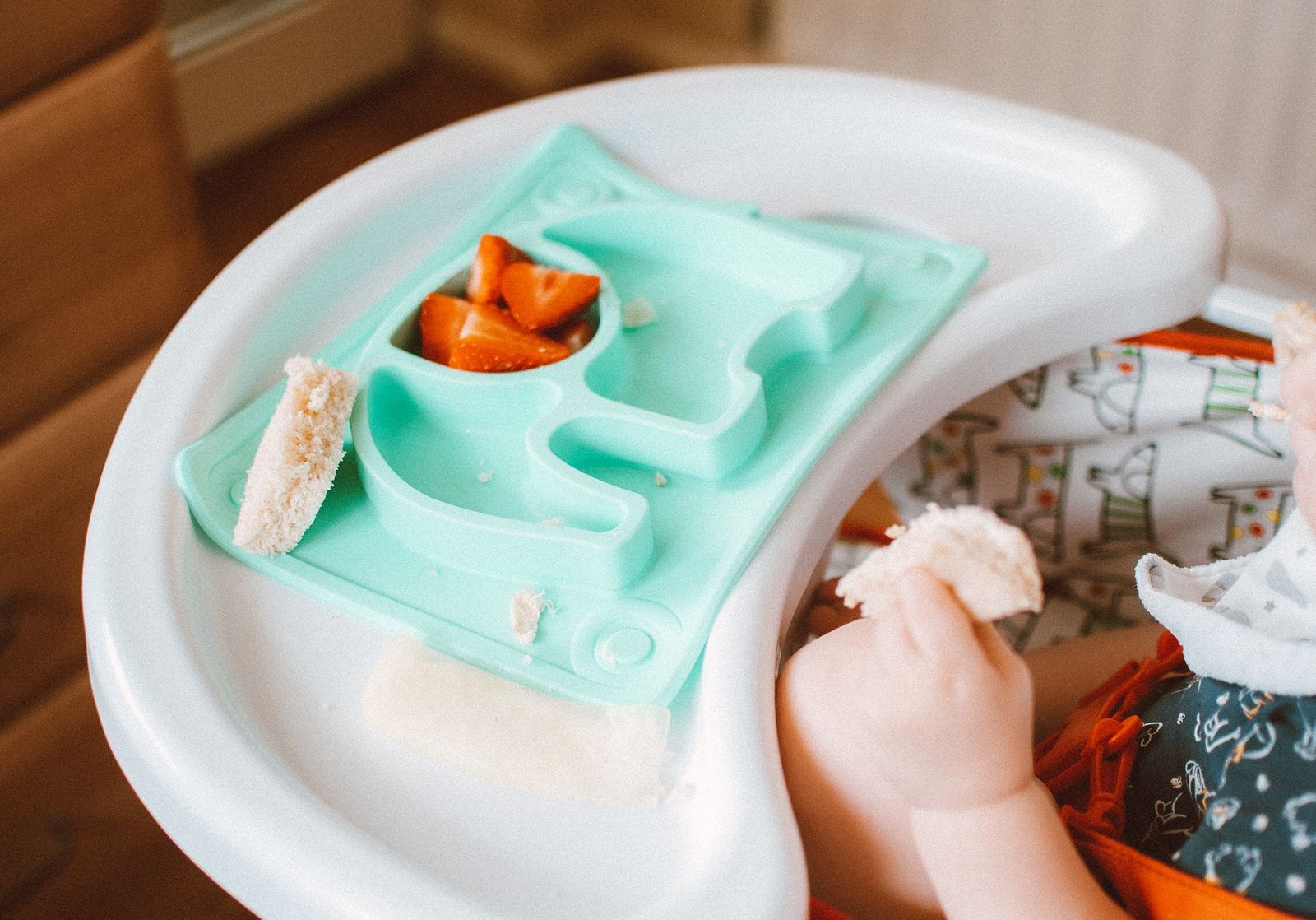
A high chair becomes part of the room's daily traffic. It must fit the child and be used safely, but it also needs to leave adults enough space to move, serve food and clean. Measure the usable floor area before choosing a model from a photograph.
Check the manufacturer's age, size and developmental requirements and use the chair only when they are met. A reclining position or extra cushion does not automatically make a chair suitable for a child who is not ready for its intended use. Use the correct configuration and approved components for the exact model.
Try the restraint and tray
The tray is not a substitute for the restraint. Use the straps as instructed every time, including the components designed to prevent slipping or standing. Check that you can fasten and adjust them correctly and clean them as directed. A restraint that is inconvenient still has to be used; that makes its operation worth trying before purchase.
If the chair folds, confirm that it locks securely into the intended position. Inspect the legs and footprint, and make sure the chair cannot be placed where the child can push against a counter or table and create a tipping risk. Keep older children from climbing or playing on it, and never leave a young child alone in the chair.
Measure the space with an adult seated beside it and another person passing through. A chair may fit under a table when empty but need considerably more room during use. If you intend to store it between meals, practice the complete folding and storage sequence rather than judging only the folded dimensions.
Picture the chair during a normal meal
Imagine the chair in position while someone opens the refrigerator, another person carries a plate and an older sibling walks past. Check that its legs and tray do not create an avoidable obstruction and that the seated child cannot reach hot dishes, cords or other hazards. The room needs to work with the chair occupied, not only folded against a wall.
If you will use the chair at a table without its tray in an approved configuration, verify the fit and instructions for that use. Do not remove a component merely because it makes the chair slide under the table. The manufacturer’s required setup takes priority over the appearance of a neat dining arrangement.
Make cleaning part of the comparison
Look at seams, removable covers and places where food collects. Follow the manual for washing and reassembly, especially for straps. Avoid choosing a system that requires you to remove safety components routinely without being confident you can replace them correctly.
For a secondhand chair, identify the model, check recalls and confirm that every required part and instruction is available. A missing strap cannot be excused because the tray appears snug. Do not improvise a replacement or use an unverified accessory to change the fit.
The best chair for a small dining area is not necessarily the narrowest one. It is the chair that can be positioned and used correctly, cleaned without excessive difficulty and stored safely if necessary. Compare those ordinary actions before deciding whether extra modes or accessories add anything useful to your meals.