Laundry is a cycle, not a single machine load. Clothes must be collected, checked, washed, dried and returned to a usable place. A system can look successful beside the washer while clean clothes remain in baskets for days. Start by finding the stage where the household regularly gets stuck.
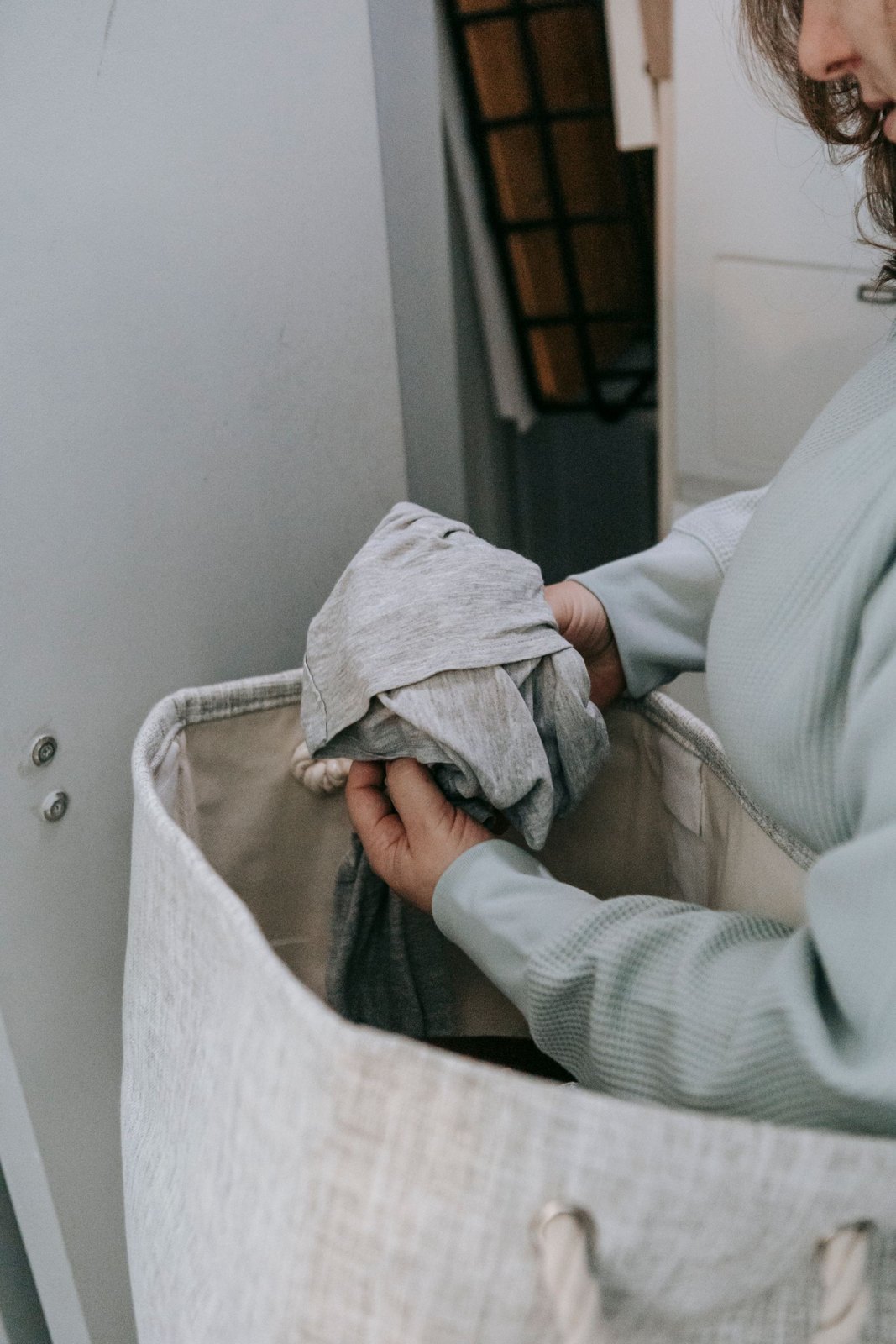
Place laundry collection points where clothes are actually removed, without blocking movement. Decide what belongs there and what needs separate handling. Damp clothing should not sit indefinitely in a closed pile, and care labels still matter even when the household is busy.
Choose a rhythm that fits capacity
Some households prefer a regular wash day; others do better with smaller loads through the week. The useful choice is the one that leaves enough time and space for drying and putting away. Starting more loads than you can finish can simply move the backlog from one room to another.
Give children suitable parts of the process as their abilities develop: placing clothes in the right basket, matching socks or returning a small pile. Adults remain responsible for machines, products and tasks requiring supervision. Keep detergents, including packets, sealed in their original packaging and locked away out of children's sight and reach.
A useful test is to follow one load all the way through on an ordinary day. Note where it waits and why. If drying finishes after everyone has gone to bed, move the wash earlier or choose another day. If clean clothes wait because the drawers are full, solve that storage problem rather than adding another laundry basket. The bottleneck determines the change.
Share the later stages explicitly. One adult starting the machine while another repeatedly sorts, folds and puts away the load may still be an uneven arrangement. Children can take on a manageable return task, but do not assume the person who notices the finished dryer must own everything that follows. Agree on a complete handoff when one person cannot finish the cycle.
Simplify the return stage
Sort clean clothes by person or destination if that helps. Not every item needs an elaborate folding method. Use storage that allows the household to find and put away clothes without rebuilding a perfect stack each time.
Check whether drawers are too full. Growing children accumulate sizes they no longer wear, and those items can make current clothes harder to return. Move outgrown pieces into a separate decision process rather than repeatedly folding them into the active drawer.
For a household with several school or activity uniforms, identify the actual deadline. Washing the required item in time is more important than completing every possible load. Keep the routine visible enough that another adult can take over without guessing which basket contains tomorrow's essentials.
Review recurring trouble rather than blaming whoever last touched the laundry. A basket may be too far away, a drying space may be insufficient or the schedule may be unrealistic. Changing that condition is often more useful than asking everyone to try harder at the same system.