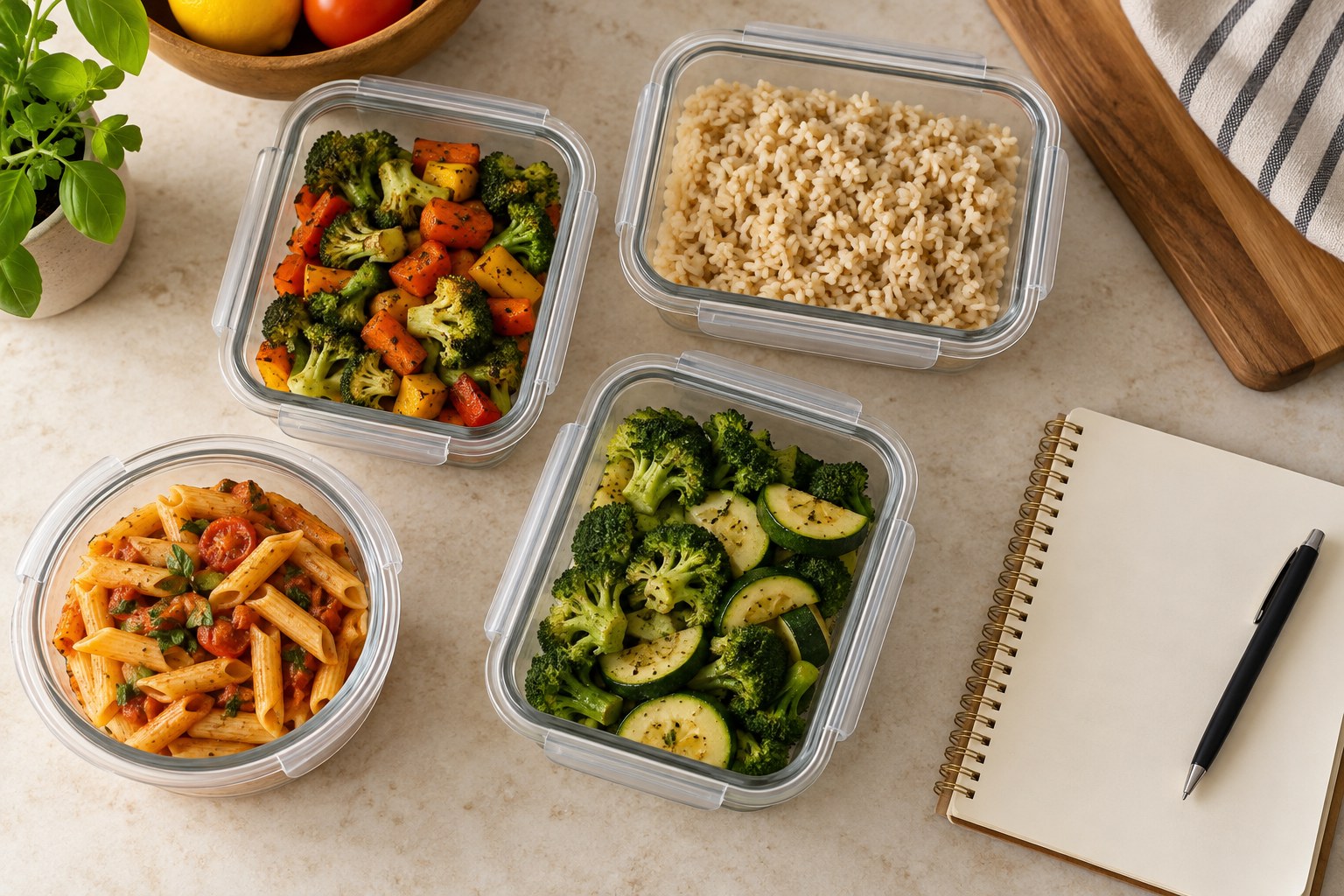
A meal plan can become wasteful when it assigns a new recipe to every evening. Leftovers have no place, a late meeting disrupts the sequence and ingredients bought for Friday are still waiting on Sunday. Leave deliberate space for the food and time you actually have.
Check the refrigerator and freezer before choosing meals. Identify what needs to be used within its safe storage period and what can wait. Do not rely on smell alone to decide whether a perishable food is safe. If you cannot establish how it was stored or how long it has been there, follow appropriate food-safety guidance rather than forcing it into the plan.
Match effort to the calendar
Put the simplest meal on the busiest evening. A more involved recipe belongs on a day when someone wants and has time to cook it. Include who will prepare the meal, not just what the meal is; otherwise the plan can become an assignment silently handed to one person.
Leave one flexible slot for safely stored leftovers or a change of plan. Most cooked leftovers should be used within three to four days in a refrigerator kept at 40°F or below, or frozen appropriately. Label containers with the date so the flexible night does not become a search through unidentified food.
Buy ingredients with more than one use
Choose overlap that suits the household rather than forcing the same meal repeatedly. Vegetables intended for one dinner may fit another, and a basic staple can support several options. Keep relevant allergies and food requirements clear, particularly when reusing components prepared with different ingredients.
Have a modest backup meal from foods you normally keep. It should be something someone can make when tired, not a theoretical recipe requiring another shopping trip. The backup is part of the plan, not evidence that the plan failed.
When an evening changes, move the food decision as well as the calendar entry. Refrigerate perishables promptly and freeze suitable portions before they become too old to use safely. Do not keep postponing the same cooked dish without considering its storage time.
Review what was left at the end of the week. If the household regularly needs fewer planned dinners, buy for fewer. A meal plan earns its place by making shopping and cooking easier, not by producing seven different dinners or an uninterrupted row of checked boxes.