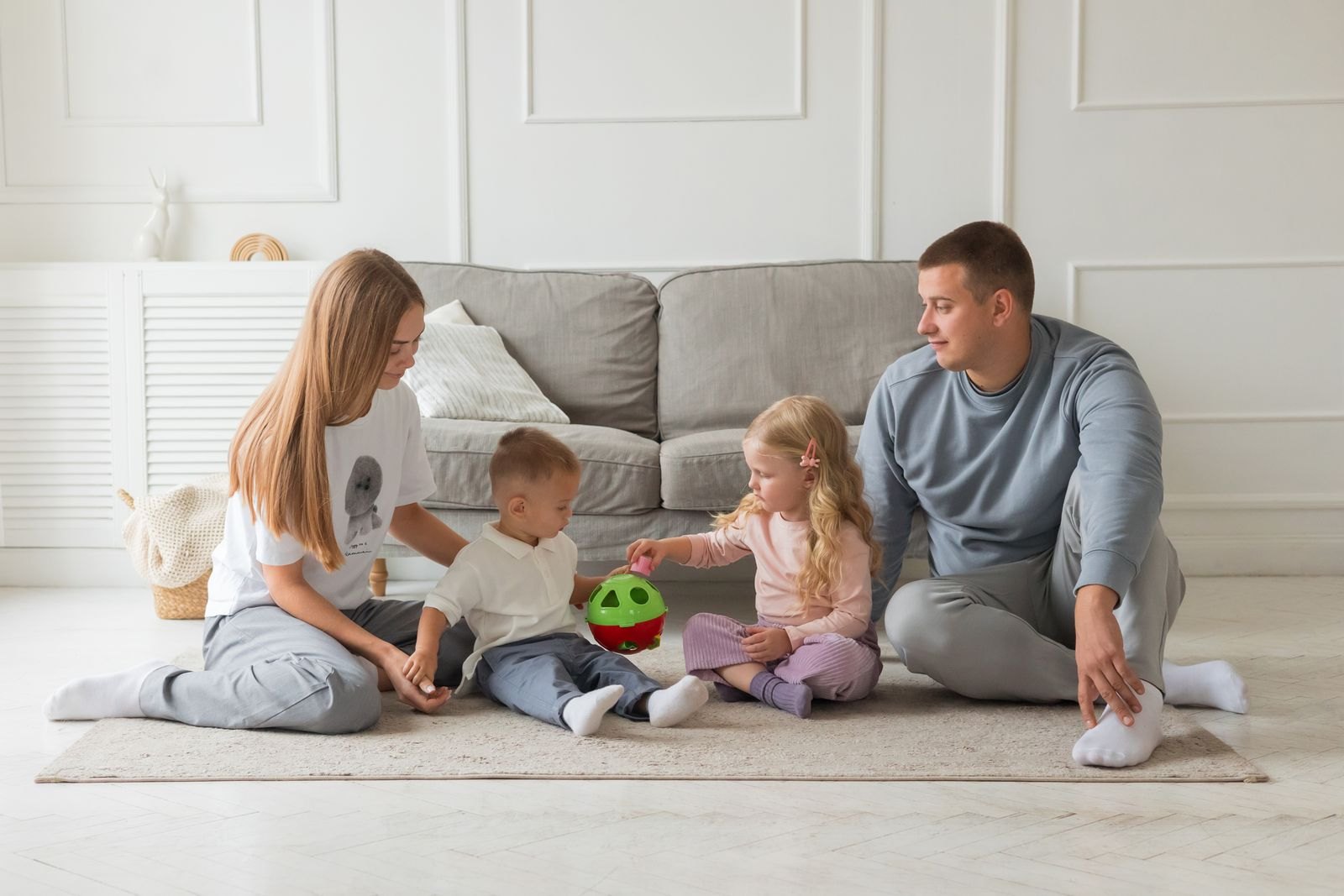
A small living room can support play without becoming a room where nobody can sit or walk. Begin by identifying the routes that must remain clear and the furniture the household uses every day. Fit the play area around those needs rather than treating every empty corner as storage space.
Choose a modest set of toys appropriate for the room and the children using it. Large collections can live elsewhere if space allows. The living room does not need to hold every activity simply because it is where the family spends time together.
Make the boundary understandable
A suitable mat, a low storage area or the space beside a sofa can signal where play begins. It does not have to be a physical barrier. Keep doorways, exits, heaters and other necessary access clear, and avoid arrangements that encourage climbing on furniture.
Anchor furniture and televisions using appropriate installation guidance. Storage placed low does not remove the need to secure furniture that can tip. Keep cords and unsuitable small items out of young children's reach, and check the room from the perspective of how it is actually used during play.
Give cleanup a short route
Put containers close enough that returning toys does not require carrying them through the house. Use broad groups that are easy to understand. A simple basket for suitable toys may work better than a large cabinet with many tiny compartments.
Leave room for an unfinished activity where feasible, but agree on what must be cleared before the room changes use. A small construction can move to a safe designated place; a sprawling game may need to be put away. The agreement should protect both play and the room's other purposes.
For example, a family might keep books and a few building toys in the living room while art materials remain in an adult-controlled cupboard nearby. This makes common activities available without leaving every material accessible all the time.
Review the setup when interests change. If the same toys are never used, remove them from the active area rather than adding more containers around them. A defined play space works because it is easy to begin and finish using, not because it keeps all evidence of children out of the room.