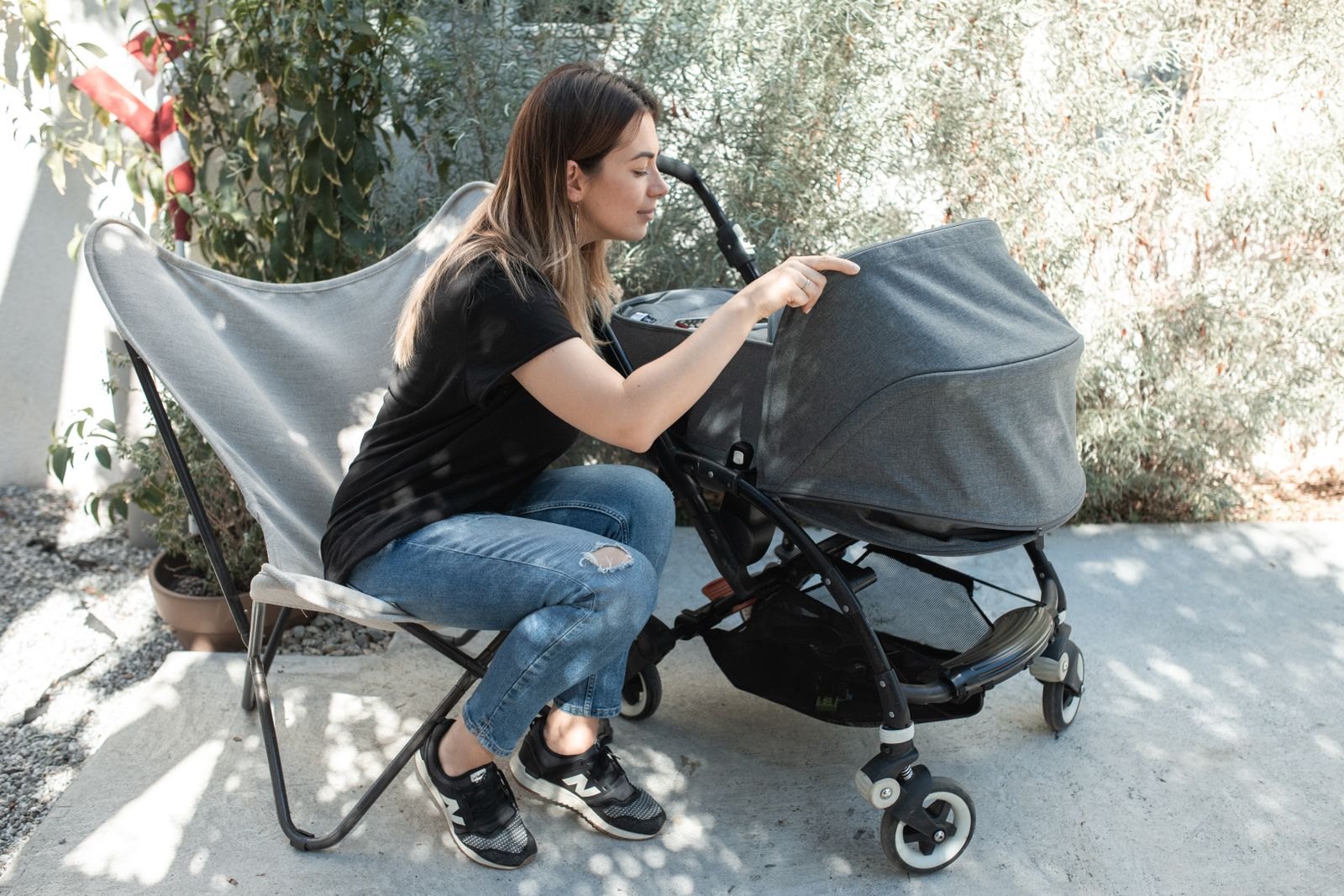
The stroller that looks comfortable in a wide store aisle may be awkward in your building's doorway or impossible to fit beside groceries in the car. Before choosing, measure the places it must pass through and think about the route you use most often.
Check the open width against your doorway, elevator and storage area. Check the folded dimensions against the car's usable cargo space, including the other things that normally travel there. If you can try a demonstration model, fold and lift it yourself. A mechanism that another adult operates easily may not suit your reach or strength.
Match the stroller to the child and route
Read the manufacturer's requirements for age, size and developmental readiness, including any approved configurations for a young infant. Do not assume a reclined seat is suitable for every newborn. Use only compatible parts and accessories specified for the model.
Think about pavement, curbs, public transport and stairs. Larger wheels or a heavier frame may suit one route while making another difficult. If you regularly use transit, check the operator's stroller rules and how you would manage a required fold. Do not build the plan around lifting an occupied stroller up stairs without checking safe handling instructions.
Try the brake, harness and seat adjustments. The restraint must be used correctly each time, not only when the child seems likely to move. Check that the stroller locks into its intended open position and that you can operate it without placing fingers near moving joints. Keep the child clear during folding and unfolding.
Compare two ordinary departures
Imagine one household storing a stroller beside a ground-floor door and another carrying it from an upstairs apartment to a car. The same model can create very different daily effort. The first household may prioritize the walking route; the second also needs to understand the safe storage and carrying process, without assuming the child can remain in it during every movement.
If you share care with another adult, try the departure with each person. Check handle adjustment, the fold and how the permitted load affects handling. A feature that works only for the taller caregiver can become a recurring problem. Record those observations before comparing accessory bundles, which may add cost without improving the task that matters most.
Count storage that can actually be used
Look at the basket's access when the seat is reclined and follow its load limit. A generous-looking basket is less helpful if you cannot reach it in the configuration you use. Do not hang a heavy diaper bag from the handles; loading the stroller contrary to its instructions can affect stability.
Consider cleaning and ordinary wear. Can the cover be removed as instructed? Is the manual available? Can the manufacturer identify replacement parts if needed? A stroller you expect to use daily should be manageable after a muddy walk, not only attractive when new.
Finally, try the whole departure sequence: bring it from storage, open it, arrange the permitted supplies and move through the doorway. That short rehearsal reveals more than counting cup holders. Choose the stroller that fits the child and the household's real movements, while meeting the product's safety and use requirements.