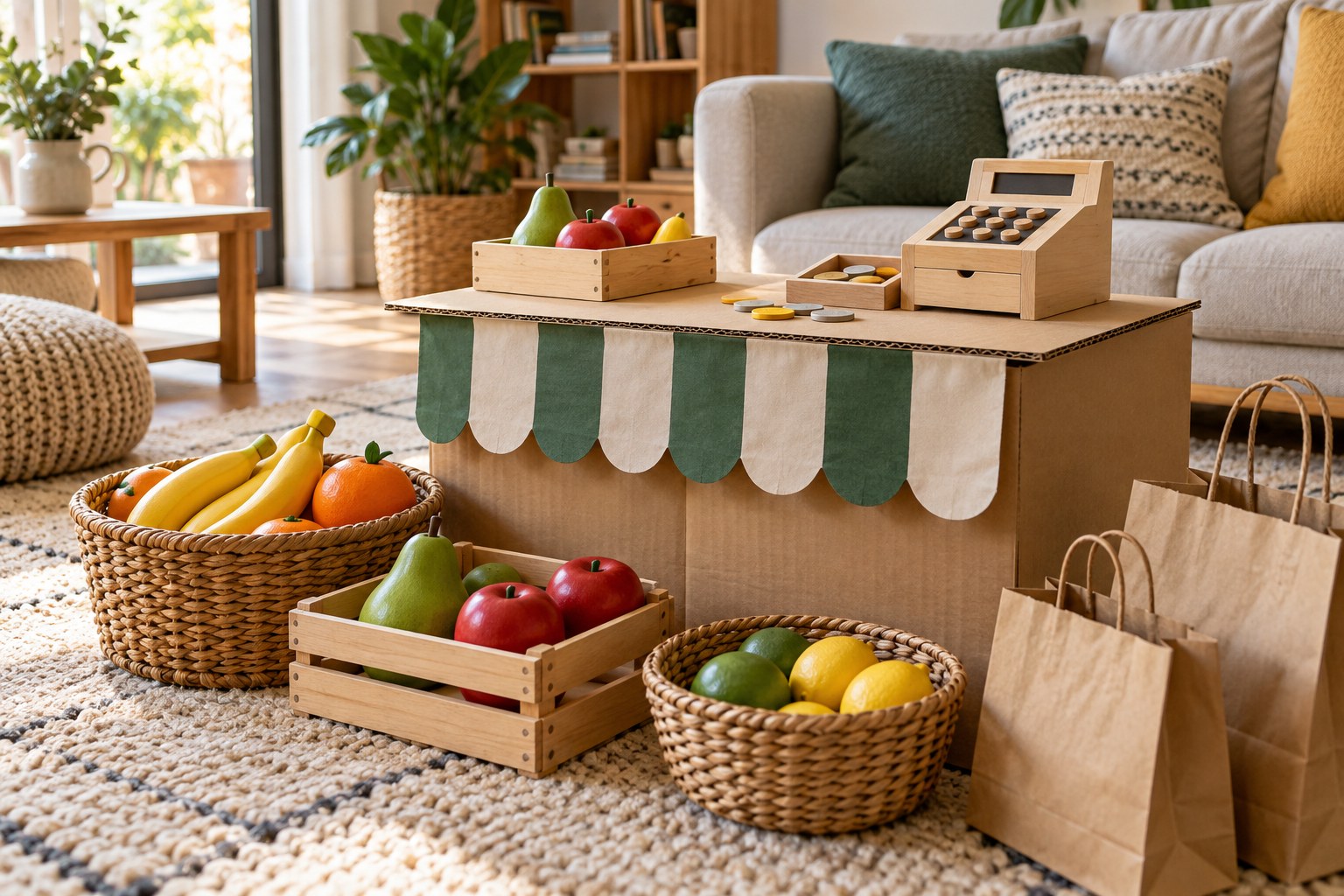
A pretend store can begin with a few objects arranged on a low table and a handwritten sign. It does not need a toy cash register, a full set of miniature groceries or a lesson about money. Start by asking what kind of shop the child wants to run.
Choose props that suit the children's ages and the way they play. Large blocks can stand for goods, and empty clean boxes can become stock after an adult removes staples, sharp edges and unsuitable packaging. Do not use medicines, cleaning containers or other hazardous household packaging as pretend groceries.
Give the store a small area
A tray, shelf or section of a table provides enough space. Leave ordinary walking routes clear and avoid creating a setup that children can climb on or pull over. If you use chairs or furniture, use them as intended rather than balancing pieces into a makeshift counter.
The shop can sell imaginary things. A block might be a loaf of bread, a ticket or a cloud. Follow the child's description unless clarification would make the game more enjoyable. The realism of the display matters less than whether everyone understands the play.
Let roles change
One person can be the customer and another the shopkeeper, but children may want to move between roles quickly. Agree on a turn if needed, or create a second job such as arranging stock. Do not require an older sibling to be the assistant throughout.
For children ready to explore numbers, draw large paper price labels or use spoken prices. Avoid real coins or small tokens when they could be a choking risk to any child present. Counting is an optional part of the game, not a condition for buying an imaginary sandwich.
Add a problem only if it helps
You might ask what happens when the shop runs out of something, or whether a customer can order a gift. The child may invent a delivery, change the menu or decide the shop is closed. Those answers can take the play in a direction you did not plan.
When interest ends, gather the reusable props in one container and recycle unsuitable packaging. Keep only the amount you have room to store. A pretend store is easy to reopen when its materials remain simple, and the next version does not have to sell the same things.