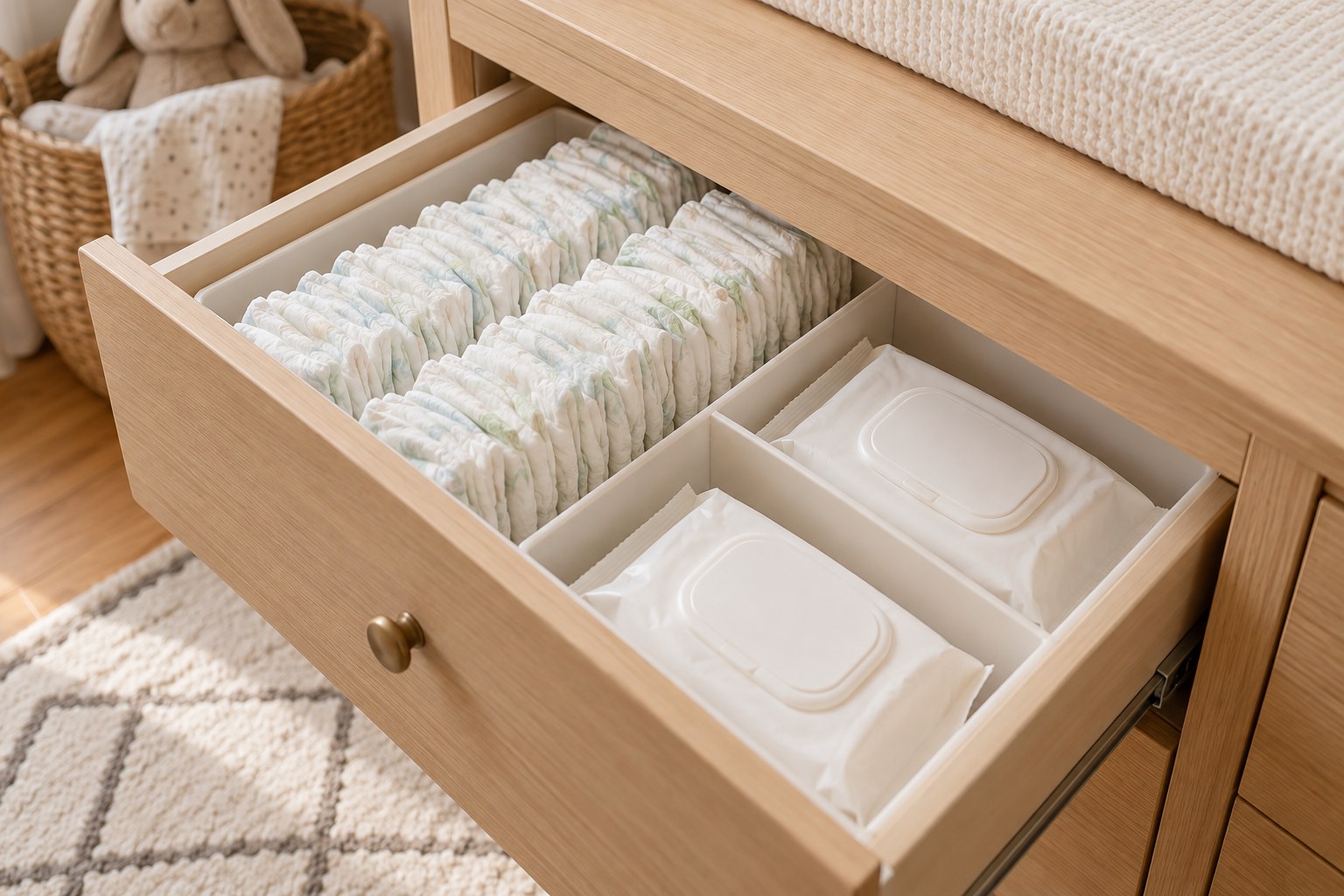
Diapers and wipes are easier to manage when the package you use today is separate from the supply for later. A crowded changing area can hide how much remains, while a bulk box in another room can be inconvenient during a change. Give each quantity its own place.
Choose a working supply that fits neatly near the adult's changing position. Prepare it before the baby is on an elevated surface so you do not need to step away. Keep the changing area itself clear and make sure the child cannot reach bags, care products or other unsuitable items.
Store refill packs according to their instructions in a clean, dry place. A shelf that is easy for adults to access is more useful than a high stack that must be dismantled. Keep wipes properly closed between uses rather than decanting them into an arrangement that allows them to dry out or become contaminated.
Make the size visible
If you have more than one diaper size, keep them clearly separated. Open only what you need and check fit as the baby grows. Buying a large quantity can reduce shopping trips, but it can also leave many unused diapers if the child moves to another size sooner than expected.
Use the last unopened pack or another clear point as your reminder to restock. Choose a cue that suits your shopping routine rather than waiting until the final diaper is in use. If more than one adult buys supplies, keep a shared note so two emergency purchases do not arrive on the same day.
For homes with more than one changing location, give each a modest supply and refill from one central place. Avoid hiding several full boxes around the house. You should be able to tell what you own without opening every cupboard.
After a size change, remove the old size from the everyday area and decide what can appropriately be returned or passed on. Do the same with supplies that no longer suit your routine. Storage is working when it keeps the next change prepared and makes the next purchase obvious, without turning every spare corner into a stockroom.