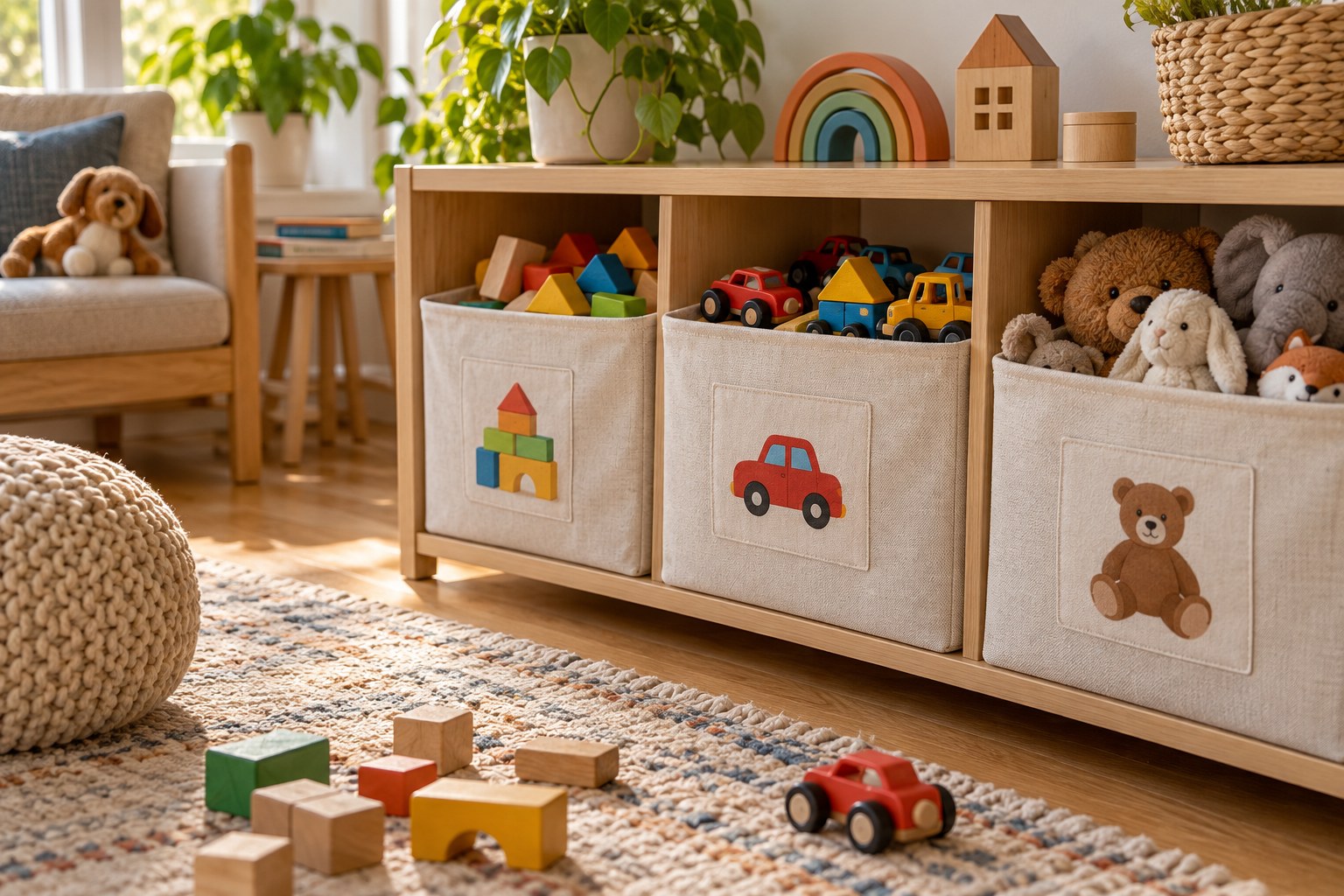
Buying storage bins before sorting can produce a tidy-looking collection of things you still do not need. It can also leave containers that do not fit the shelf or the objects they were meant to hold. Begin with one manageable group of belongings and find out what actually remains.
Separate current use, items kept for a clear reason and things that need another destination. Make decisions about broken or unsuitable products before putting them into storage. A new container does not make an unsafe item suitable to keep using.
Measure the real space
Check shelf width, depth and usable height, including the room needed to remove a lid or pull the bin out. Measure the contents in the arrangement you intend to use. A container that fits tightly on a shelf may be inconvenient if every retrieval requires lifting another box first.
Consider weight when full. Children should not be expected to lift a heavy bin above shoulder height, and adults should not need an awkward reach for everyday items. Follow shelving and container load limits and anchor furniture where required.
Choose access before appearance
Frequently used items may suit an open container, while occasional stored belongings may benefit from a lid. Clear sides can help identification, but opaque containers can work with a simple label. Neither style is automatically more organized.
Keep hazardous materials in appropriate original packaging and secure storage, not in general household bins chosen to match the room. Some objects need ventilation, protection from moisture or other conditions that an ordinary plastic box does not provide.
Try a container you already own before purchasing several. A temporary box can reveal whether the grouping is useful and whether the size works. Once the system has been used, you can decide whether a more durable container would help.
Leave some capacity for ordinary change, but do not buy large empty bins merely to fill a wall. The purpose is to make belongings easier to find and return. If a container hides a decision that still needs to be made, sort that decision before adding another label.