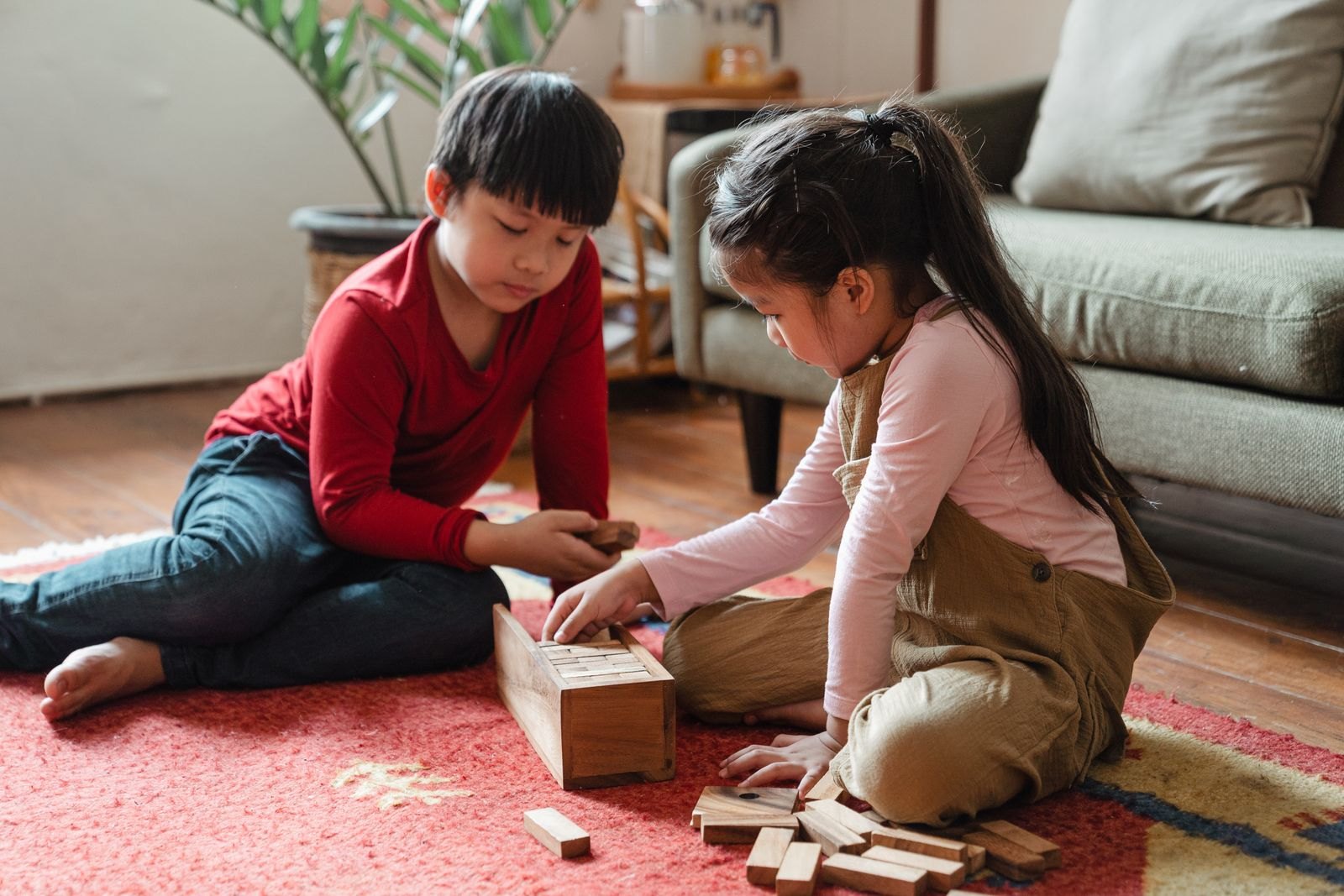
Two children wanting the same toy does not always mean one refuses to share. They may disagree about whether the toy is communal, when a turn ends or whether an unfinished game counts as still using it. Clarify those questions before telling them to sort it out.
Distinguish shared toys from personal belongings. A child can have some possessions that are not automatically available to a sibling. For shared items, explain the ordinary arrangement in language both children can understand. Younger children may need adult help to manage it, not merely a rule announced once.
Give a turn a recognizable end
A turn might end after a particular part of the game or an agreed interval, depending on the activity. A timer can help in some situations, but it is not always the most natural measure. Interrupting a complex construction every minute may create more conflict than arranging a longer turn or another activity.
Make sure the proposed arrangement is realistic for each child. An older child should not always surrender because they can understand the younger one's distress. At the same time, a toddler may not be able to manage a long abstract wait without support. The adult can provide an alternative and help make the waiting period workable.
If grabbing or hitting occurs, stop the unsafe behavior and attend to anyone hurt. Do not continue the negotiation as though safety can wait until the children agree. Once settled, restate the immediate arrangement briefly rather than delivering a long speech about being kind siblings.
Teach a request they can use
Help the child ask for a turn or explain that they are still using the toy. Listen for the actual problem: perhaps one child is repeatedly dismantling the other's work, or the pieces needed for two games have been mixed together. A storage or play-space change may help more than another sharing reminder.
You can support a solution without deciding every detail forever. As children gain skills, let them propose arrangements and step in when needed. Sharing is not a requirement to feel cheerful about every wait. The goal is a fair, understandable process that protects both children's play and keeps the toy from becoming a recurring contest for adult attention.