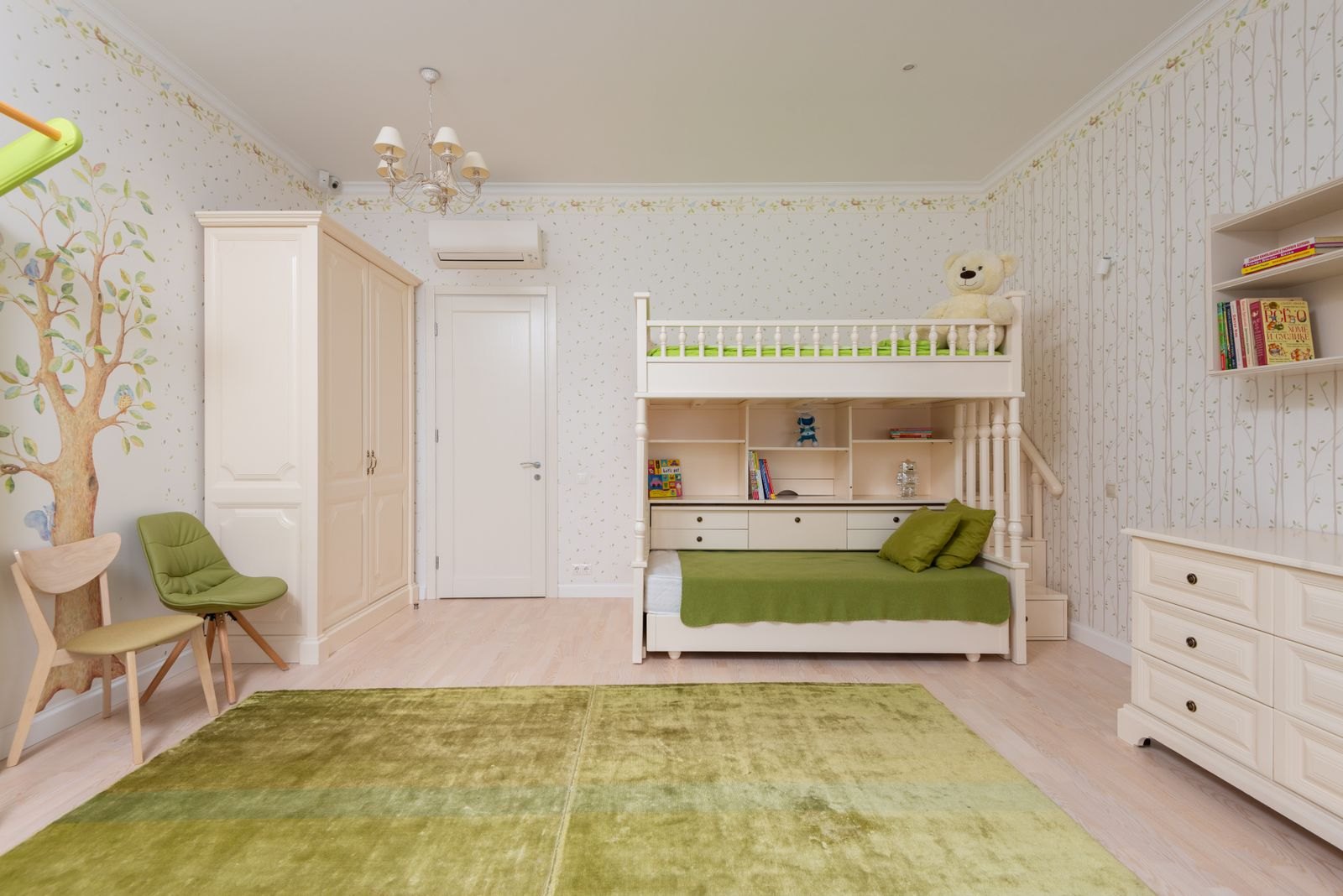
Sharing a bedroom does not require sharing every toy, drawer or quiet moment. Children may be close in age and still have different needs for privacy, sleep and possessions. Start by distinguishing individual space from common space, even when the room is small.
Give each child a clearly identified place for personal belongings. It might be a drawer, a shelf or a suitable container. Agree that borrowing requires permission and that some items may remain private. For younger children, the adult may need to manage access rather than expecting a label to enforce the boundary.
Separate ownership from availability
A toy being in the shared room does not automatically mean anyone may use it. Explain which materials are shared and which belong to one child. Keep items with small parts or other age-related hazards inaccessible to younger siblings, even if the older child is usually careful.
Plan the common floor and surfaces. A project that remains out for several days may need a tray or designated area so the other child can still move and play. Avoid using the more organized child's space as the overflow area for everyone else's belongings.
Discuss different rhythms
If bedtimes or wake times differ, choose arrangements that reduce avoidable disturbance. Consider where an older child can read or prepare for bed without repeatedly waking a younger one. Keep sleep spaces appropriate to each child's age and product requirements; do not let a desire for matching furniture override safety.
Talk about light, sound and visitors at a calm time. A child may want friends in the room while a sibling wants privacy. Agree on asking first, storing private items and using another space when available. The room cannot meet every preference simultaneously, but a predictable process is better than whoever argues first deciding.
When a dispute occurs, name the specific problem. One child moved a personal item without permission, or a shared path is blocked. Avoid turning the conflict into a permanent description of one child as selfish and the other as messy.
Revisit the arrangement as interests and schedules change. An even split of floor space is not always the only fair solution, but each child should have something that feels reliably theirs. A shared bedroom works better when togetherness includes boundaries, rather than requiring constant access to each other's things.