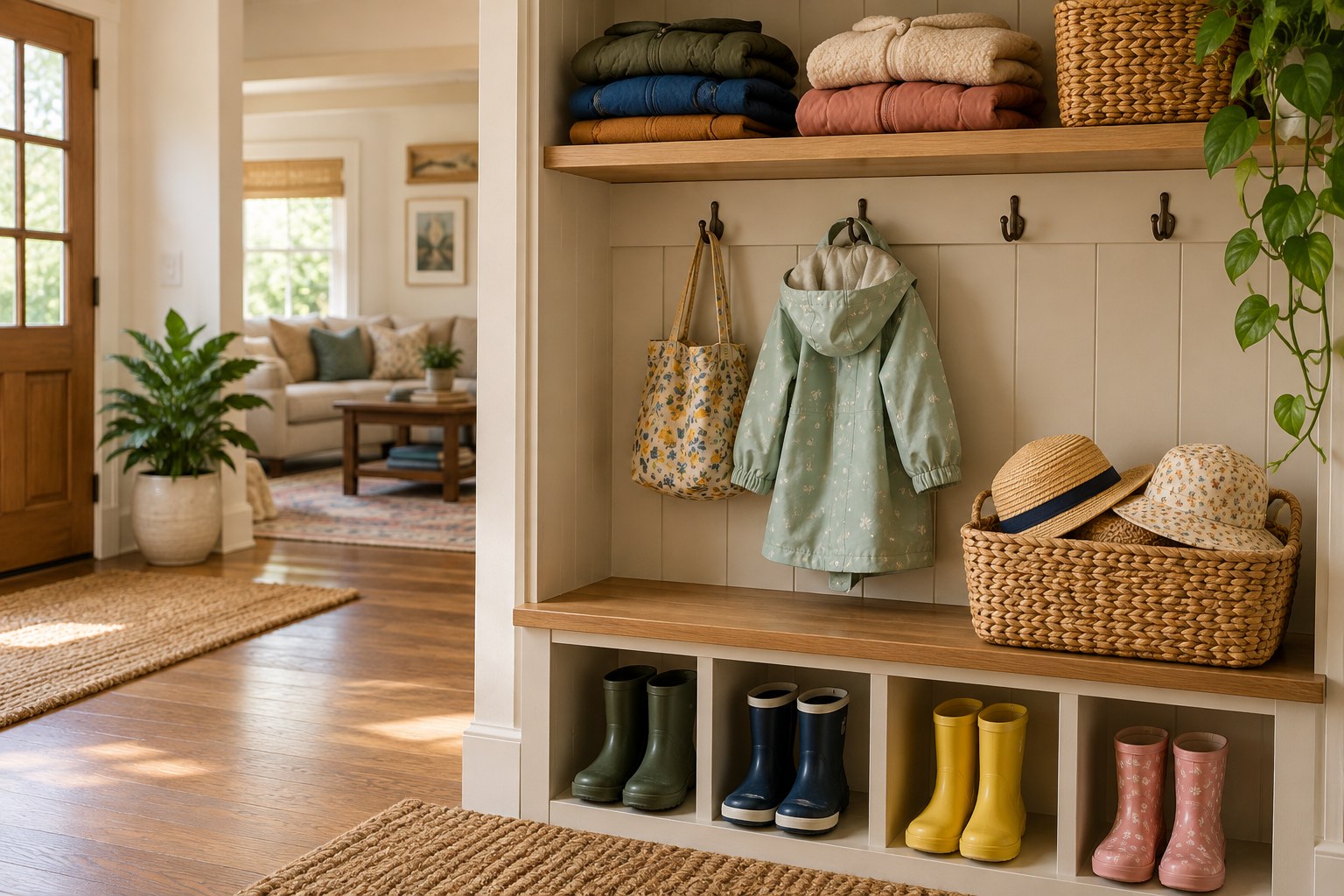
Seasonal outdoor gear becomes difficult to find when it is stored only by object type. A hat is in one cupboard, gloves in another and the bag for the activity somewhere else. Group the items that leave the house together, while allowing for different care and drying needs.
Start with the season and activities currently happening. Keep active gear accessible and move out-of-season items to an appropriate secondary place. Before storing anything for months, clean and dry it according to its instructions and check condition.
Build a usable group
A container for a particular activity can hold suitable small items, but it should not become a sealed home for wet clothing. Separate equipment that needs ventilation, secure storage or special care. Keep hazardous products and age-inappropriate small pieces away from children.
Use a label that describes the activity or person rather than every object. If several people use similar gear, a simple distinction can prevent mixing sizes. Check fit before the season starts, especially for growing children, rather than discovering a problem when everyone is ready to leave.
Create a return route
Decide what happens immediately after an outing. Wet gear needs a suitable drying place, dirty items need cleaning and damaged equipment needs to be taken out of use for assessment. Returning everything straight to the departure box may make it look tidy while leaving it unready for next time.
For example, a winter outing bag can hold dry hats and gloves, while damp boots go to a separate drying area. Once dry, the items return to their usual places. The system includes both stages instead of relying on someone to remember a hidden wet bag later.
Keep a short note of missing or outgrown items and check it before shopping. Avoid buying replacements simply because the original cannot be found in mixed storage. At the end of the season, remove things no longer used and decide what will be kept, passed on appropriately or discarded.
The goal is a ready starting point for the next outing. Seasonal organization is working when people can find suitable gear and know what to do with it afterward, not when every cupboard contains a permanently packed bag.