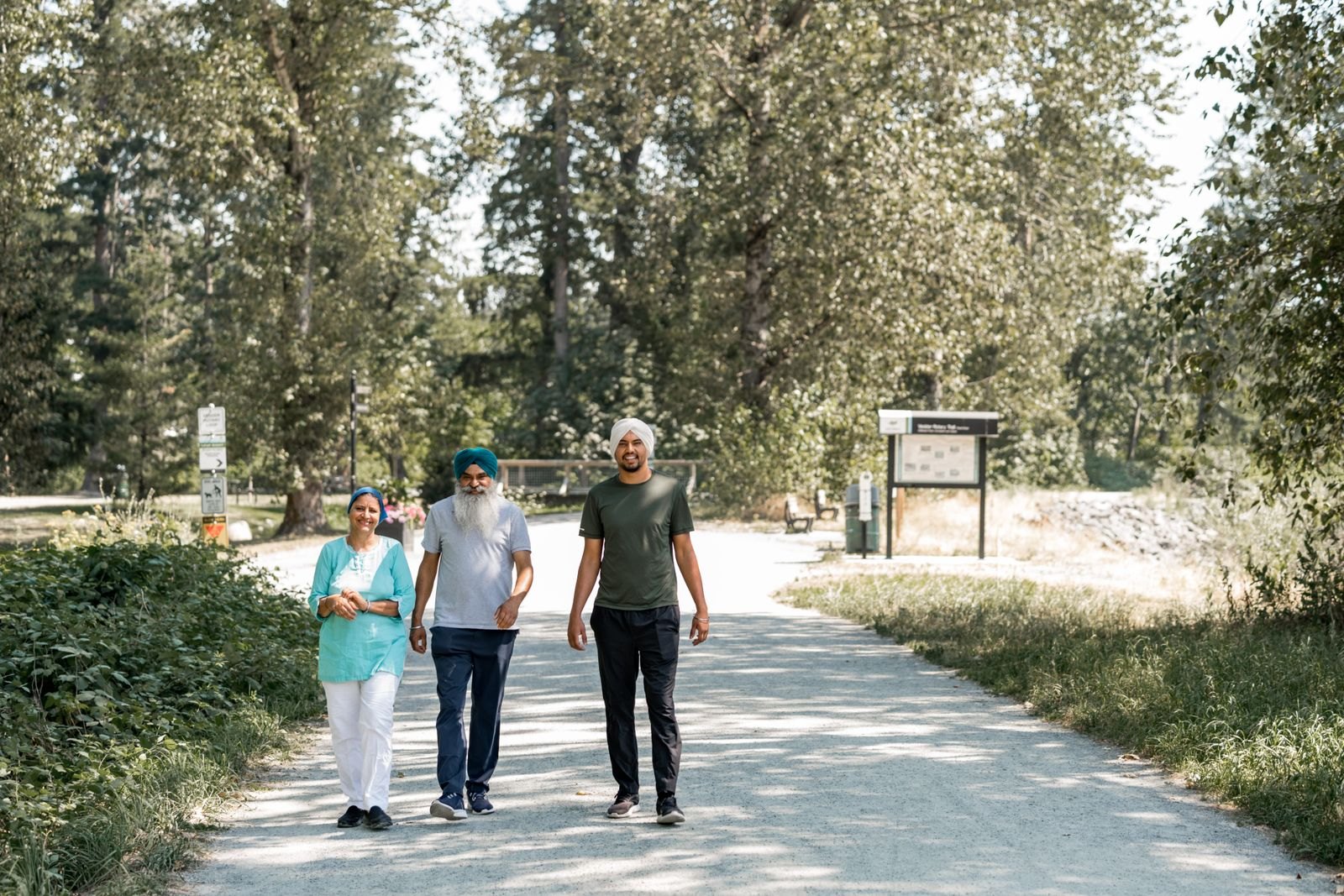
A family walk can be shortened without becoming a failed version of the original plan. Start by identifying the part people most wanted: a view, a place to play, time near water or simply being outside together. Then choose the smallest route that still includes it.
Look at terrain as well as distance. A short route with steep steps may be harder than a longer level path. Check current access, conditions and facilities through the relevant local authority or land manager when those details matter.
Give the route an early decision point
Choose a place where you can turn back or take a shorter option before everyone is tired. Discuss it while planning, so using it does not feel like one person has forced the family to abandon the day.
Be careful with loops that offer no convenient way to shorten them. An out-and-back route can be easier to adjust, but only if the return terrain and conditions are understood. Do not continue because a map suggests that the halfway point is close without considering the journey still required.
Keep attention on the people walking
Check comfort at ordinary pauses. Children may need help recognizing when they are tired, while adults may understate their own needs to avoid changing the plan. Food, water and appropriate clothing should fit the route and conditions, with any specific needs arranged beforehand.
Avoid making one person's pace the standard everyone must match. If the group splits, only do so with clear supervision, a suitable route and an agreed reunion. A faster walker should not disappear ahead while assuming someone else is managing the children.
Make the shorter version feel complete
Stop at the chosen viewpoint, have the planned picnic where appropriate or spend time noticing one part of the surroundings. You do not need to announce the missing distance repeatedly. The experience can have a satisfying ending without the longest possible line on the map.
On the next outing, use what you learned about pace and terrain. A route that suits the family is more likely to be repeated. Walking together is not improved by turning every day out into evidence that everyone can manage a greater distance.