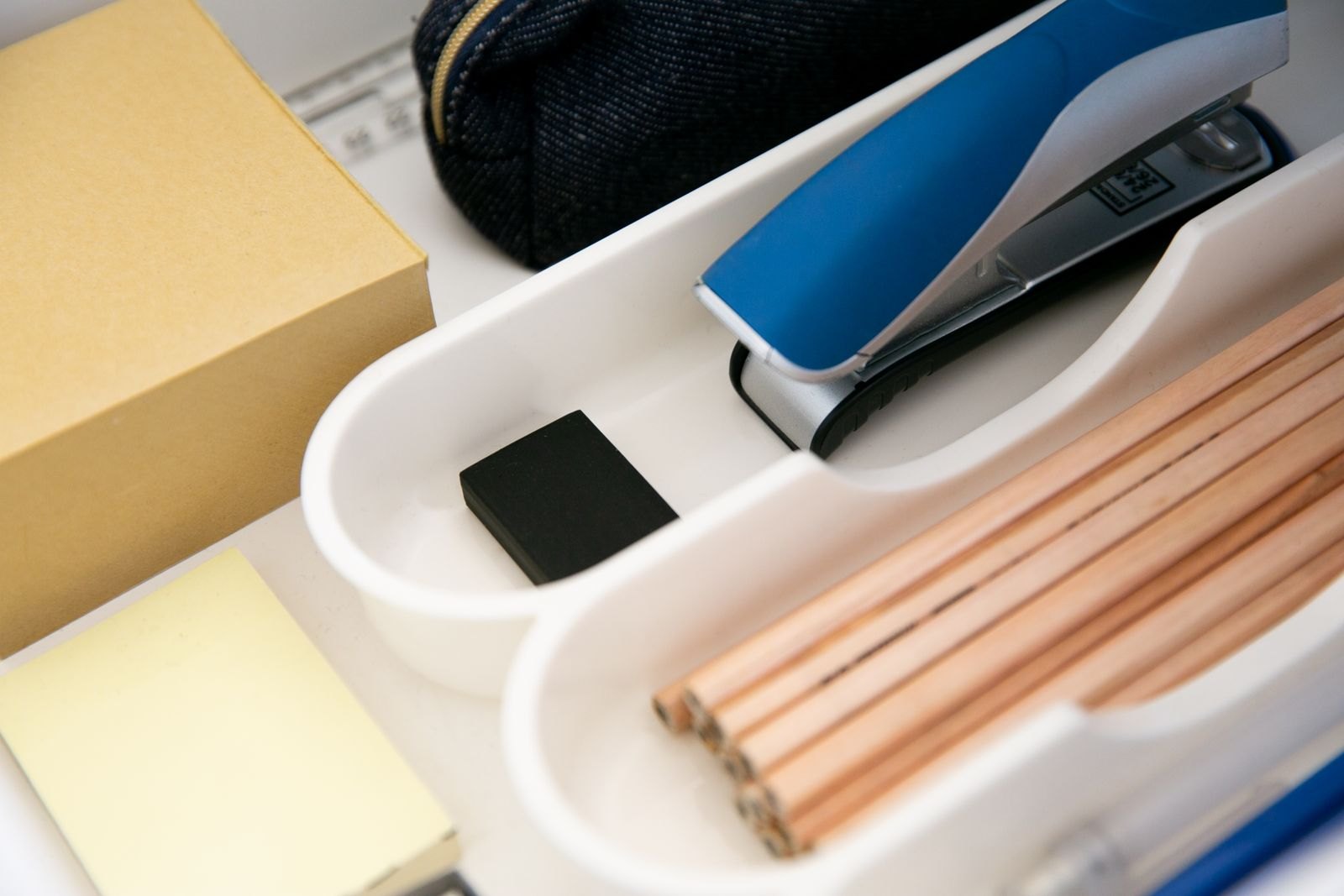
A child does not always need a permanent desk to have a workable place for school tasks. A dining table or another suitable shared surface may serve well if supplies are easy to find and the work can be moved without getting lost. A homework drawer is one way to make that transition simpler.
Choose a nearby drawer or container and fill it with the materials actually used. Basic writing supplies, a ruler and a folder may be enough. Keep age-inappropriate tools and small hazardous items under adult control rather than treating every school supply as suitable for unsupervised access.
Separate supplies from current work
Use a folder or another clear place for unfinished assignments and papers that need to return to school. A drawer full of loose sheets makes it hard to distinguish active work from old notes. Keep instructions and any required materials with the task where practical.
Check the working surface and seating. The setup should allow comfortable use and adequate light without trailing cords across a walkway. If a device is needed, arrange it according to its instructions and the child's needs rather than balancing it among dinner dishes.
Agree on the room's changing use
Choose a time or signal for clearing the table before meals. Give enough notice to save work and gather materials. If a task regularly needs more time or support, adjust the arrangement instead of treating every unfinished page as poor organization.
Adults can help the child develop a simple return sequence: work into the folder, supplies into the drawer, required items into the school bag. The level of help should follow ability and the particular task. A drawer is an organizational tool, not a measure of academic independence.
Review the contents occasionally. Remove dried-out pens, irrelevant papers and supplies that belong elsewhere. Refill what is actually missing rather than buying a large matching set each term.
If the shared surface is consistently too busy or distracting, consider another suitable arrangement. The point is not to prove that a permanent desk is unnecessary in every home. It is to create a usable place for this child, with a clear way to start, pause and finish without occupying the whole room indefinitely.