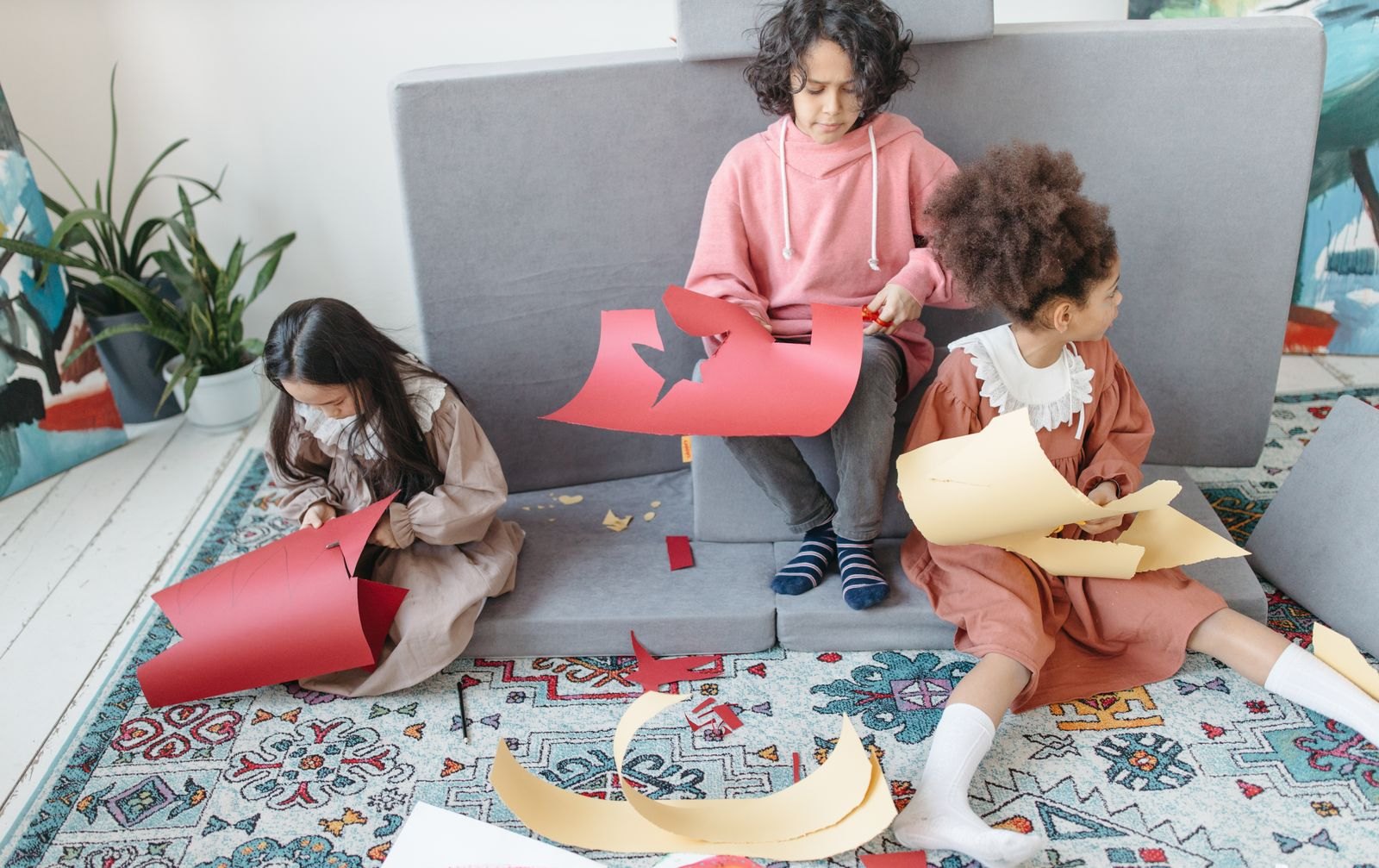
Recycled paper becomes easier to use when you choose a small selection before the children sit down. A box containing every envelope, receipt and packaging insert can create more sorting than making. Start with clean, dry paper that is suitable for the activity and free of private information.
Remove staples, sharp fasteners and unsuitable materials. Avoid packaging that held chemicals or raw food. The fact that something is destined for recycling does not make it an appropriate children's craft supply. Keep small scraps and tools away from children for whom they are unsuitable.
Pick one kind of making
You could fold simple paper structures, create a collage or draw across the backs of unwanted sheets. Choosing one starting approach helps you set out only the tools and materials needed. Children can take the idea elsewhere once the session begins.
For a folding activity, ordinary paper may be easier than thick glossy card. For collage, different textures and colors can be useful. Test unfamiliar paper with the chosen age-appropriate adhesive before offering a large quantity that will not stay attached.
Let the existing marks become part of the picture
A printed line or a patch of color might suggest a road, a window or a pattern. Children can use those details or cover them. There is no requirement to hide every sign that the paper had a previous purpose.
If several ages are working together, offer different sizes of paper and the help each child needs. Adults should handle difficult cutting. Avoid assigning the older child all the preparation while younger children get to make the interesting decisions.
Keep the leftovers smaller than the project
When the session ends, separate a modest amount of useful paper from scraps that are no longer worth storing. Follow local recycling rules, which may differ for paper with glue, coatings or other materials attached.
Do not save every finished piece automatically. Ask what the children want to keep and choose a place for it. A photograph can record a temporary construction if that suits them, but the session does not need a permanent archive.
Using paper again is a way to make something from what is already available. It should not require buying an elaborate storage system or turning each afternoon into a lesson with a prescribed result.