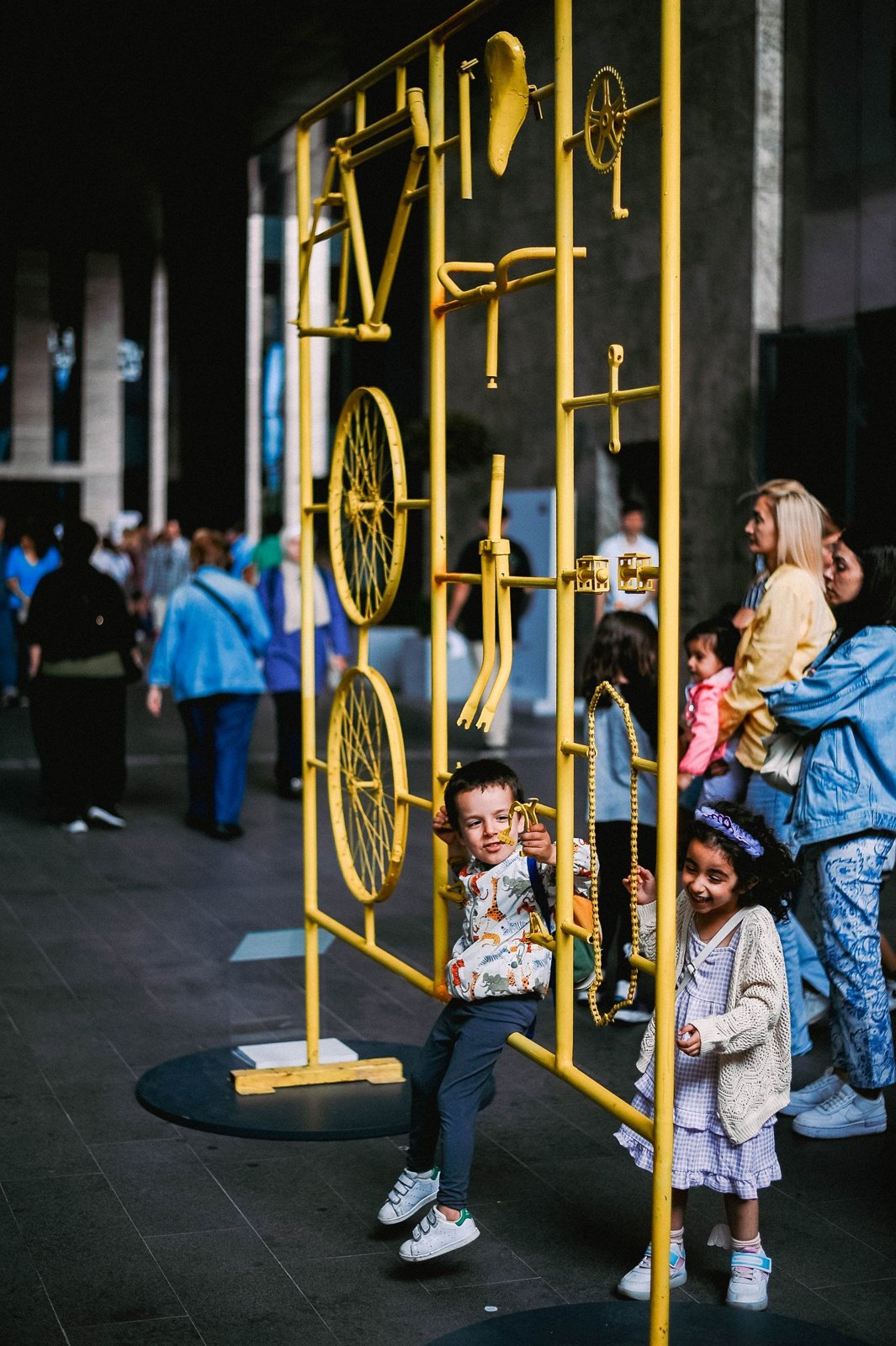
A museum visit with children does not need to cover the building. Start with one area that connects with something they already find interesting: vehicles, animals, paintings, machines or a particular story. Check the museum's current visitor information so you know how that area fits into the visit.
Look beyond a general family-friendly description. Find out about entry arrangements, facilities, stroller rules if relevant and any activities you specifically want to attend. A hands-on room may have its own schedule or capacity, so do not promise access before checking.
Begin with a small goal
You might look for one object that surprises everyone or choose two rooms to explore. This gives the visit direction without turning it into a scavenger hunt that must be completed. If a child becomes absorbed in something unexpected, allow time for it.
Explain the relevant rules before entering the area: where touching is allowed, how to move around other visitors and when voices need to be quieter. Keep the explanation specific to the setting rather than delivering a long list of everything a child might do wrong.
Let the conversation stay ordinary
Ask what they notice or describe something that catches your attention. You do not have to know every answer. Read a label together or save a question to look up later if the child wants to continue it.
Avoid requiring a response to every object. Looking quietly, returning to a favorite display or moving past something uninteresting can all be part of the visit. The adult's enthusiasm can be shared without becoming a demand that the child feel the same way.
Plan a break before it becomes urgent
Know where food is permitted and where facilities are located. Follow the museum's rules about eating and re-entry. A pause nearby can help you decide whether another room would add something or whether it is time to leave.
If you have paid for a ticket, it is tempting to stay until every possible minute has been used. But leaving with curiosity intact can be a better outcome than continuing until the day becomes a struggle. A child who remembers one fascinating object has had a real museum visit, even if most of the floor plan remains unexplored.