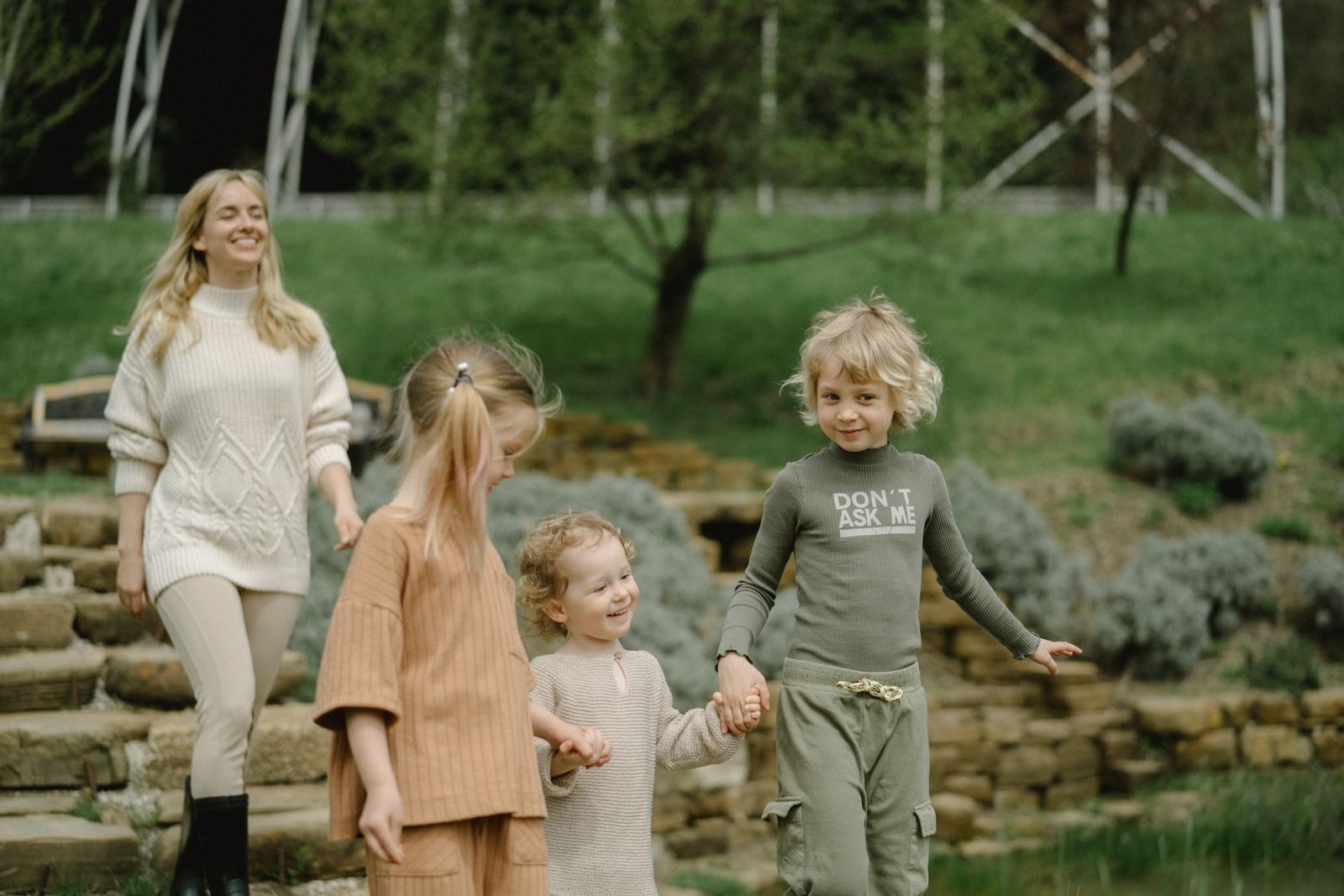
A color hunt gives an ordinary neighborhood walk a loose purpose. You do not need a printed worksheet, a prize or a bag for collecting things. Choose a few colors together and look for them along a route you already know.
Keep the walk short enough that the activity remains enjoyable. A familiar block, a route to the library or a loop through a suitable park can provide plenty to notice. The destination and ordinary road-safety arrangements still come first; the game should never send a child toward traffic or away from the accompanying adult.
Let the examples be surprising
Red might appear on a door, a flower or a sign. Blue could be a painted bench rather than the sky everyone names first. Accept reasonable interpretations instead of arguing over whether a shade belongs to the exact color you had in mind.
You can choose one color at a time or let each person watch for a different one. For mixed ages, an older child might look for two shades while a younger child points out any familiar color. There is no need to score the observations.
Notice without taking
Leave plants and objects where they are, respect private property and avoid approaching animals for the game. A child can point, describe or ask an adult to photograph an appropriate detail. You do not need a physical collection to remember what you found.
Pause in a safe place if someone wants to look more closely. Do not stop in the middle of a crossing or a busy path. The adult should keep attention on the surroundings even when the children become absorbed in the search.
Change the game when it loses momentum
If colors stop being interesting, try looking for circles or noticing different kinds of doors. You can also stop playing and simply finish the walk. The activity is there to support the outing, not to require completion before going home.
Back indoors, a child may want to draw one thing they noticed or tell someone about an unexpected find. Let that be optional. A short walk that makes a familiar street look slightly different has already achieved enough without a follow-up assignment.