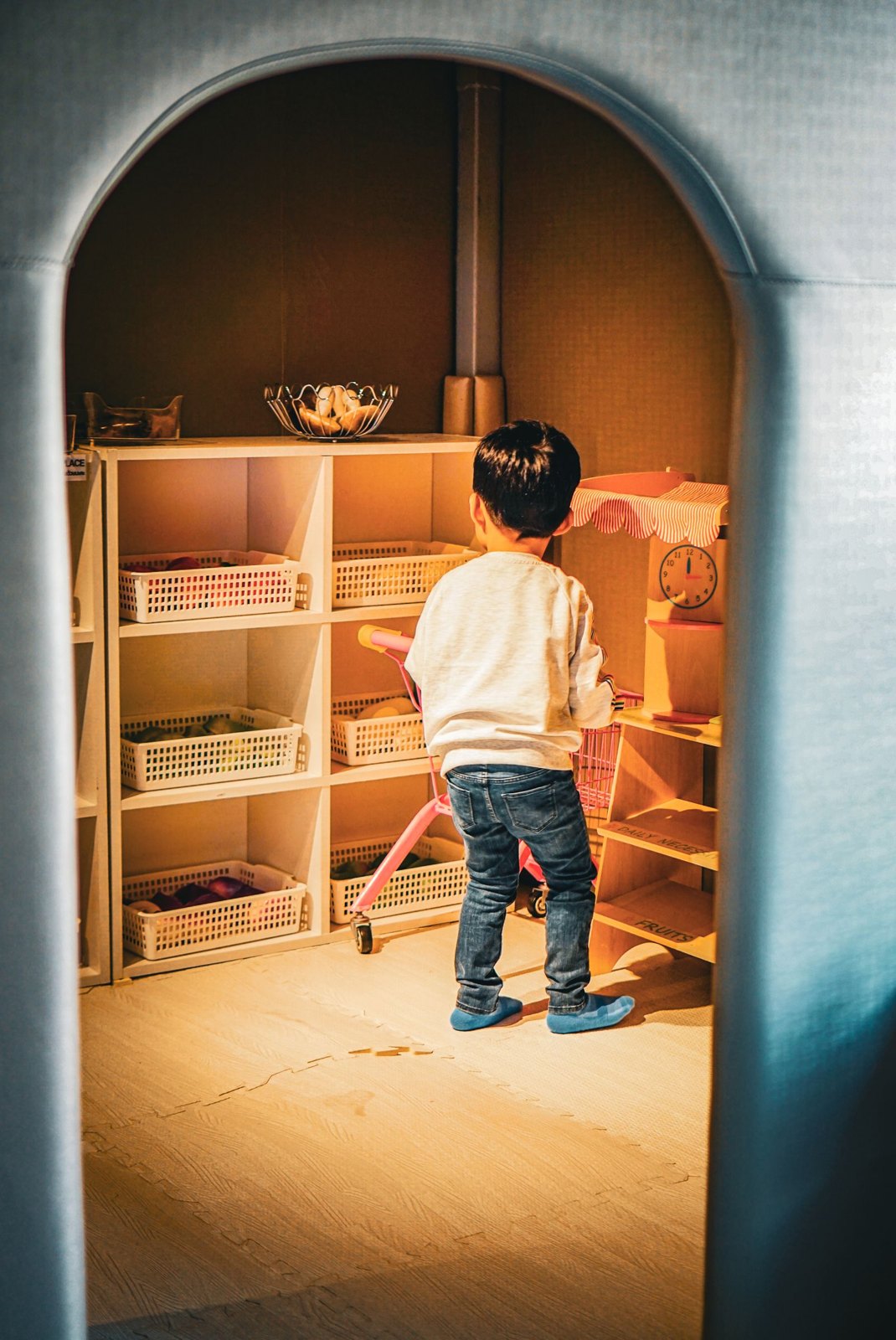
You set out paper for a collage, and the child starts making tickets. You arrange blocks for a bridge, and they become food in a restaurant. Before redirecting the activity, ask what would actually be lost by following the new idea.
Sometimes there is a real constraint: a material needs supervision, the table must be cleared soon or another child is using part of the setup. Those boundaries can stay. The original creative outcome may be much less important than it felt while you were preparing.
Find the intention behind the change
Ask what the child is making, if they want to explain. Their answer may reveal a game already underway. You can help with a practical detail without taking over: tickets need a place to be collected, or the pretend restaurant needs somewhere to put its menu.
Avoid asking a question when you are actually giving an instruction. If glue must stay on the protected surface, say that clearly. If you are curious about why the blocks have become sandwiches, ask and leave room for an answer you did not expect.
Protect other people's work
Freedom to change direction does not mean a child can dismantle a sibling's project or use every shared supply. Agree on the materials available to each person and ask before combining projects. Separate activities at the same table may be the most workable outcome.
An older child may want to continue the original challenge while a younger one invents something else. Neither needs to persuade the other. The adult can support both within the space and supervision available.
Let preparation be useful without being followed exactly
It is disappointing when a carefully prepared activity is ignored. But the materials, time and shared space may still have made the new game possible. You do not have to defend the original plan simply because you spent time on it.
Afterward, notice what the child used and what remained untouched. That information can make the next setup simpler. Perhaps fewer supplies or a more open question would have been enough.
You can also choose a more structured activity on another day when everyone understands that format. The adjustment is not a rule that children must control every plan. It is a way to distinguish necessary boundaries from a creative direction that can afford to change.