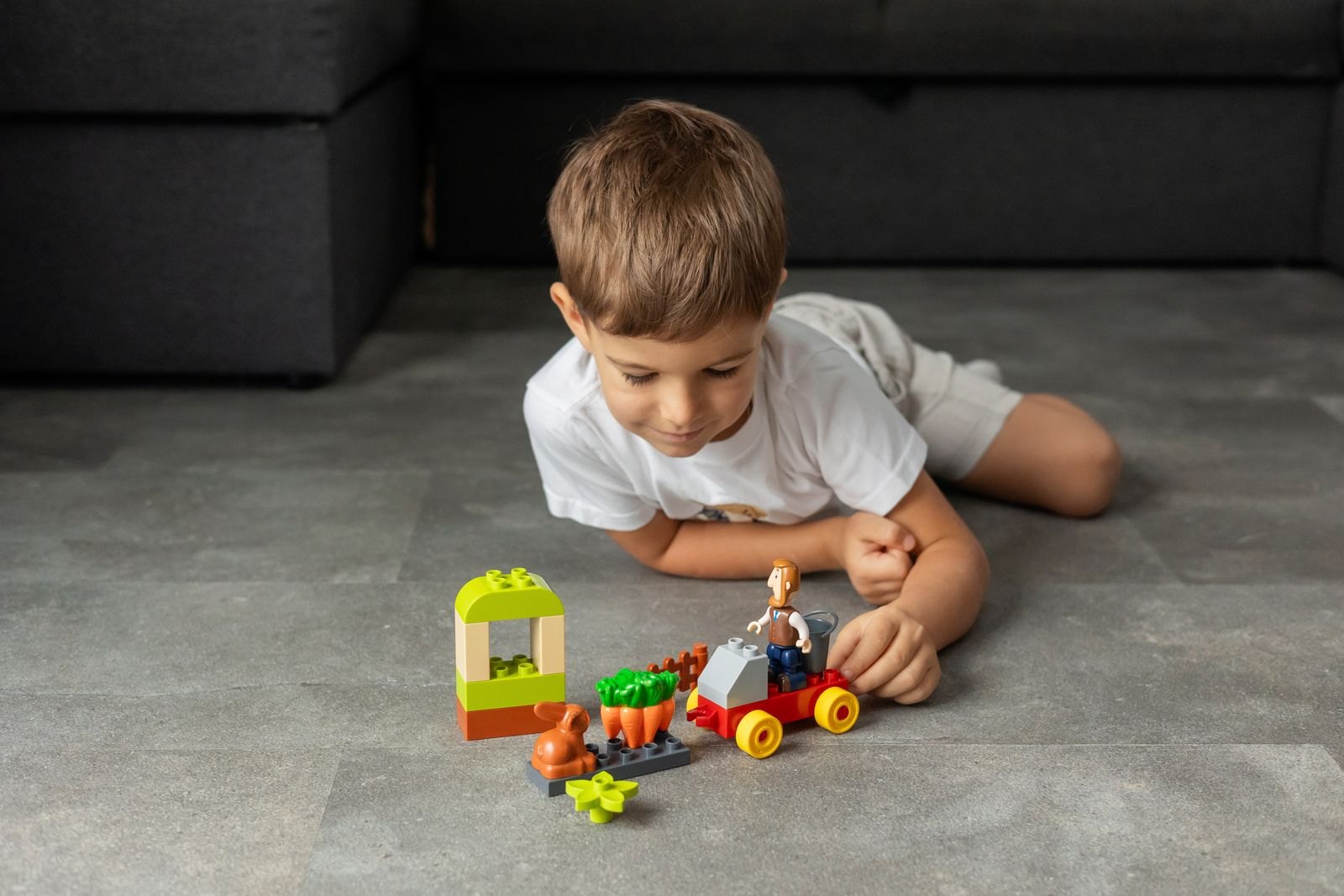
A building challenge can be as simple as making a bridge between two blocks or a home for a toy. It becomes less playful when the adult already knows the exact structure the child is expected to produce. Choose a starting problem that allows several solutions and let the materials suggest what happens next.
Use construction pieces appropriate for the children's ages and follow their safety guidance. Keep small parts inaccessible to younger siblings. The challenge should involve tabletop or floor-level models, not furniture arrangements children are expected to climb or balance on.
Start with one condition
For example, a toy vehicle might need to pass beneath a bridge. The child decides how wide and high it should be, which pieces to use and whether a road belongs on top. Resist adding more conditions every time the structure begins to work.
If a child asks what to make, offer two possible starting points. If they immediately invent something else, consider whether the new idea can become the activity. The challenge is an invitation, not an assessment with a hidden correct answer.
Make testing part of the play
Try the vehicle beneath the bridge and notice what happens. If it does not fit, ask what the builder wants to change. You can describe the problem without solving it: the roof is touching the vehicle, or the gap is narrower at one end.
Adults can help with a connection that the child physically cannot manage, but ask first and give the project back afterward. Rebuilding everything into a stronger adult version changes whose challenge it is.
Let children write the next rule
Once the first structure works, they might decide it needs two entrances, a parking space or a place for an imaginary animal. Their addition may be more interesting than the extension you planned. Older children can propose a condition for a younger child's project if both want that arrangement, but should not become permanent judges.
Photograph the result if the builders want a record. Then decide which parts can stay and which need to return to the box. A model that falls apart during testing has still produced something to think about; it does not need to be repaired into a display piece before the activity can end.