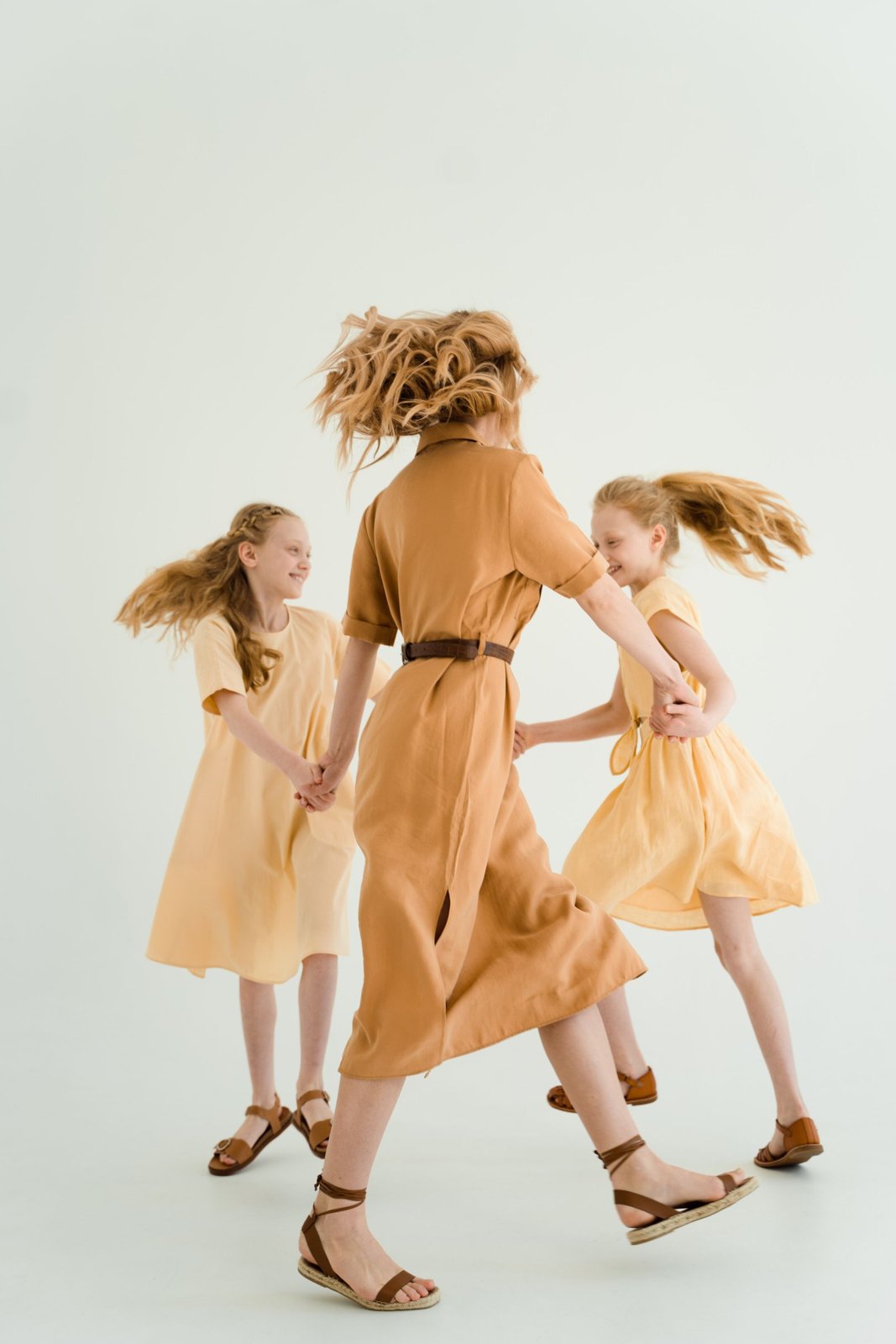
After a stretch of drawing, reading or sitting, a little movement can change the atmosphere without requiring an organized lesson. Pick a song, clear an appropriate space and decide how people can move without bumping into furniture or one another.
The break should fit the people taking part. Standing, seated movements, clapping or gently following a rhythm can all be options. Do not make jumping or a particular movement the price of joining in. If someone has specific physical needs, follow their established guidance rather than improvising an exercise routine.
Make the space do less work
Move loose objects out of the way and keep the activity away from stairs, hot drinks and unstable furniture. Use a surface and footwear appropriate to the movement. A crowded room is a reason to choose smaller motions, not to ask children to dodge obstacles at speed.
Keep the volume comfortable and consider neighbors or someone resting nearby. A music break does not have to be loud to feel different from the previous activity. If recorded music is inconvenient, a simple clapped rhythm can work.
Offer a small starting idea
Try moving slowly during one part of a song and making smaller movements during another, or let each person suggest a gesture that the others may copy. Avoid turning it into a competition over who performs best.
A child may want to watch before joining. Leave room for that without repeatedly calling attention to them. Another may invent a movement that changes the game; follow it if it suits the space and everyone can participate comfortably.
Give the break a gentle ending
Choose one or two songs rather than letting an open playlist decide how long the activity lasts. Before the final song ends, explain what comes next: a snack, returning to a project or getting ready to leave. A clear transition is easier than stopping abruptly in the middle of enthusiasm.
If the break makes the group more energetic than expected, simplify the next step instead of insisting that everyone instantly become quiet. The purpose is to change the rhythm of the day. It does not need to produce a particular mood or guarantee that the next task will happen without resistance.