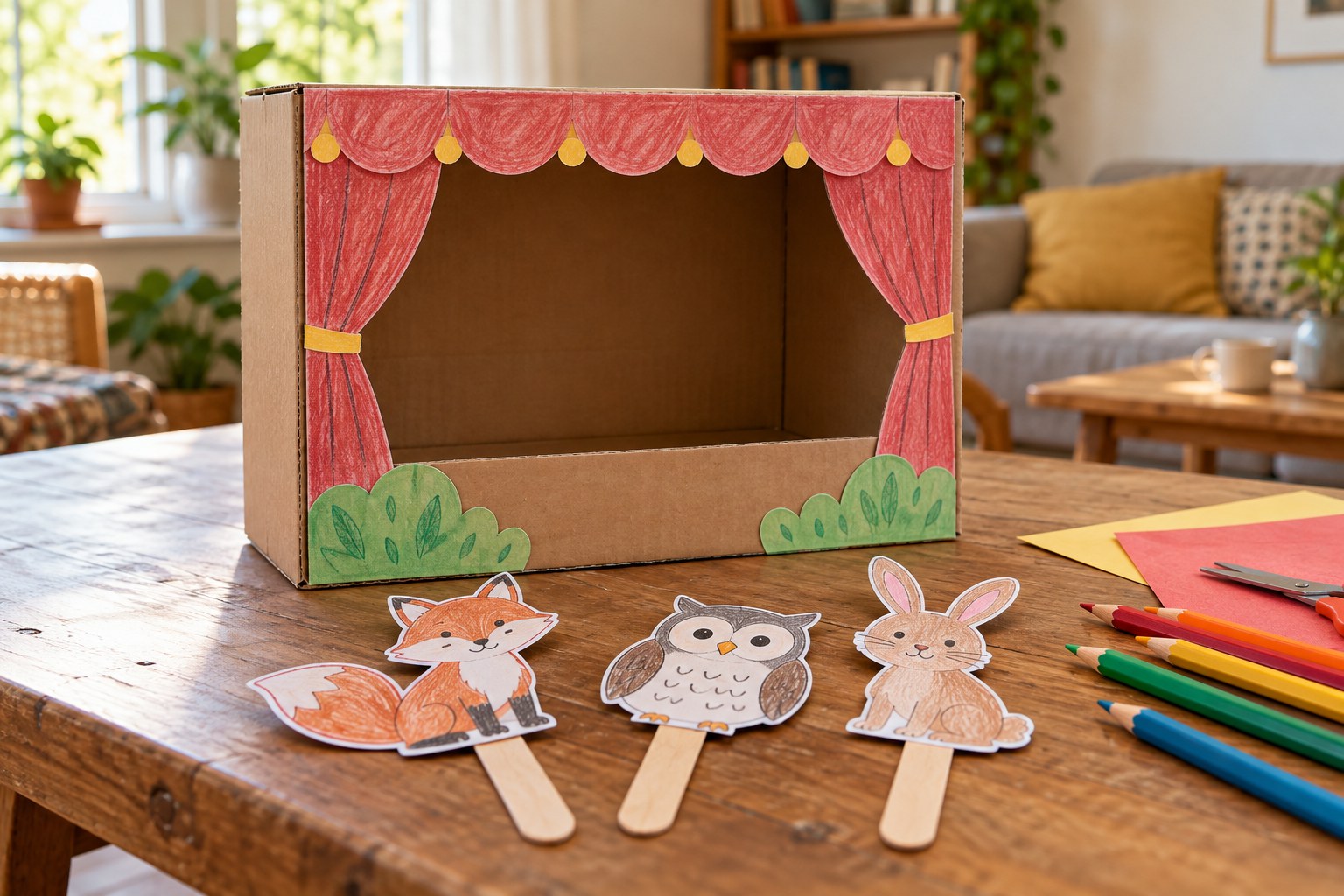
A puppet show can spend so long in preparation that nobody has energy left to perform it. Keep the first version small: two or three paper characters, a clear space to hold them and one situation they can respond to. A character has lost a hat, opened a shop or arrived at the wrong party.
Use materials appropriate to the children's ages and supervise tools as needed. Adults can do difficult cutting. Large folded paper characters may be easier than adding sticks, fasteners or loose decorations, especially when younger children are nearby.
Give each character one recognizable feature
A color, a large shape or an exaggerated expression can distinguish the characters. Detailed costumes are optional. Ask who the character is and what they want, then let the drawing follow that idea rather than correcting it into a standard person or animal.
The stage can be a tabletop. Avoid balancing heavy objects or asking children to hide beneath unstable furniture. You do not need a curtain or a constructed theater to make the audience understand that the play has begun.
Choose a small problem
Two characters both want the same seat, or one cannot find the way home. The children can decide what happens next. An adult may help begin the conversation, but should avoid supplying every line or steering the story toward a predetermined lesson.
If several children want the same role, try separate short scenes or let the character change performers. Someone who does not want to perform can make a sign, choose a sound or watch. Participation does not need to look identical.
Keep the audience kind and brief
Ask before recording. A child may enjoy playing privately without wanting a video shared with relatives. If there is an audience, give the performers space to pause or restart without turning the moment into a production that must go smoothly.
The show can end when the small problem is resolved or when attention moves elsewhere. Save the characters in a folder if the children want to use them again. The next story may have nothing to do with the first, and the same paper figure can become someone entirely different.
A short improvised scene is enough. The point is the conversation children create between their characters, not how closely the result resembles a theater performance.