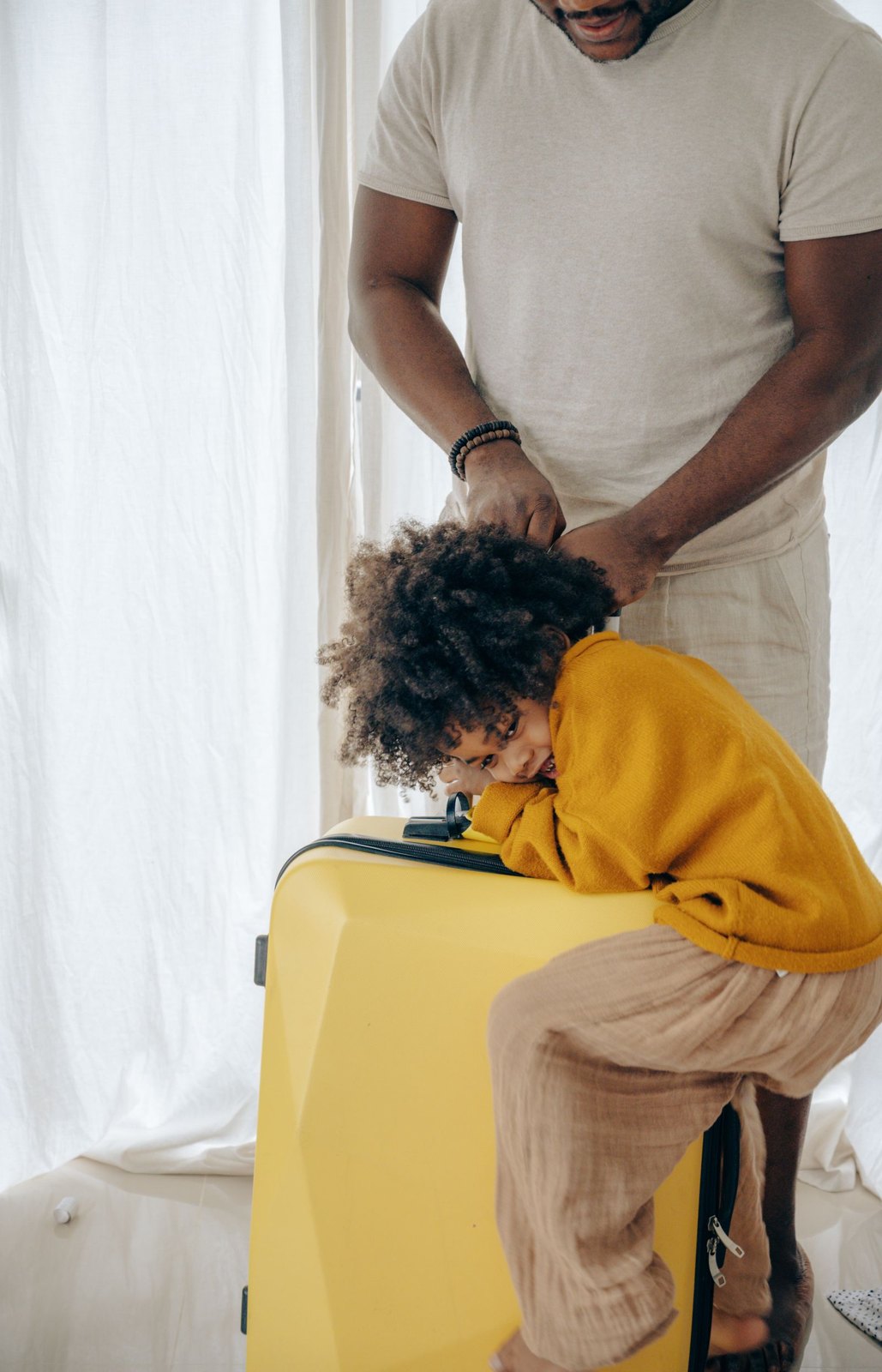
A parent's work trip changes the household even when it lasts only a few days. A child may want to know who will handle breakfast, pickup or bedtime more than where the adult is traveling. Begin with the parts of the child's day that will change and the parts that will remain familiar.
Explain the trip at a time and level that fit the child's understanding. Younger children may benefit from a simple description closer to departure, while older children may want more notice and detail. Avoid a long countdown that creates uncertainty without useful information.
Make the care plan visible
Name the adult who will be responsible and explain any changes in transport or routine. Share the practical information directly with that caregiver; the child should not have to remember and deliver instructions. Keep school or childcare contacts informed through the appropriate process where needed.
A simple calendar or sequence of familiar days may help some children understand the absence. Do not promise an exact return moment if travel could change it. Explain what you know and how updates will be shared if the plan moves.
Choose a realistic contact arrangement. A brief call may work well, but time zones, work and the child's routine can make a fixed daily call difficult. Offer an alternative such as a recorded message or a note, without requiring the child to perform happiness on camera. If a call is missed, explain rather than leaving the caregiver to invent a reason.
Allow different reactions
One child may ask many questions and another may continue playing. Neither response tells you the whole story of how they feel. Invite questions and acknowledge missing the parent without promising a gift as the main solution.
Keep ordinary routines where they help, but allow the caregiver to manage the home in a workable way. The traveling adult does not need to supervise every task remotely. Agree on important decisions and contact needs beforehand, leaving room for the caregiver's judgment.
On return, allow time to reconnect without expecting an ideal greeting. The child may be excited, quiet or occupied with something else. A shared ordinary activity can be enough. The preparation has worked when the child knows who will care for them and how to find out what happens next.