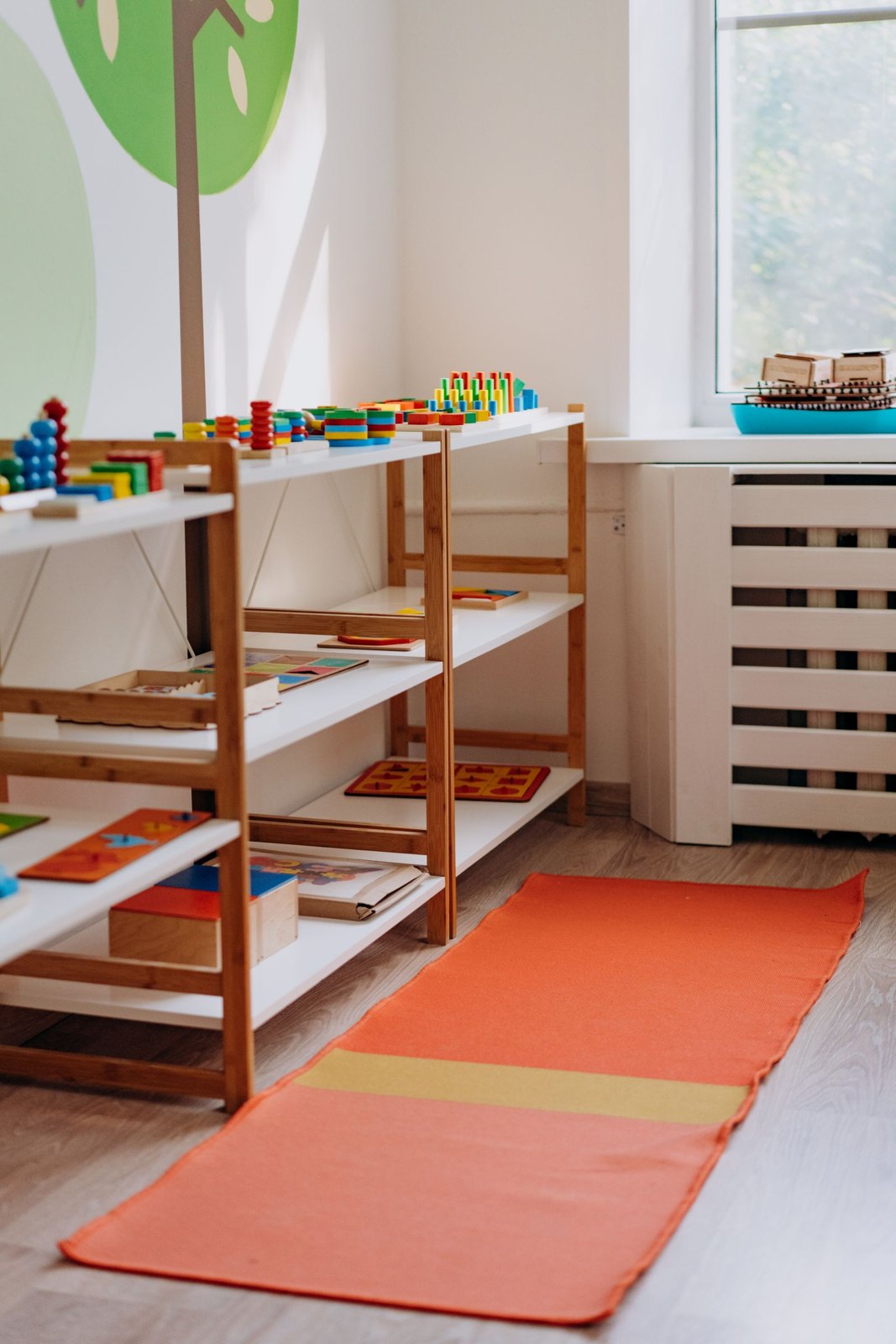
A rainy-day shelf is more useful when it offers a few visible possibilities than when it holds every activity the family owns. The aim is to make starting easier. If choosing something requires opening six boxes and asking an adult what each one contains, the shelf is behaving more like storage than an invitation.
Begin with the things your children already use. A drawing set, a familiar puzzle and a small construction activity may provide enough variety. You do not need a new collection purchased specifically for wet weather.
Give each activity a clear boundary
Keep the pieces for one activity together in a container suited to the child using it. A picture on the front can help when the contents are not obvious. Avoid elaborate labels for things that are already easy to identify.
Check age guidance and keep unsuitable small pieces or tools inaccessible to younger children. A shelf within reach should contain only items that are appropriate for that child's access and supervision arrangements. An older sibling's craft supplies may need a different storage place.
Set out the amount that fits your available surface. For example, a puzzle that requires the entire dining table may be a poor choice just before lunch. A tray of paper and crayons can move more easily. Matching the activity to the actual space prevents the first decision from creating a second problem.
Change one thing when interest fades
There is no need to rotate the whole shelf on a calendar. If a box has been ignored for a while, put it away and try something else. Keep favorites available; familiarity is part of their usefulness.
An activity can also change through one addition. Drawing paper might become a place to make signs for a pretend store. Building blocks could be used to make a bridge rather than a tower. Offer an idea if it helps, then allow the child to use the materials differently.
Make clearing away part of the setup
Before starting, show where loose pieces return and decide what can remain unfinished. A project space on a tray is different from a general promise that everything may stay on the floor indefinitely.
When the rain ends, the shelf does not need to disappear. It can remain a small set of familiar options for any afternoon at home. Its value comes from being understandable and manageable, not from keeping children occupied for a predetermined number of hours.