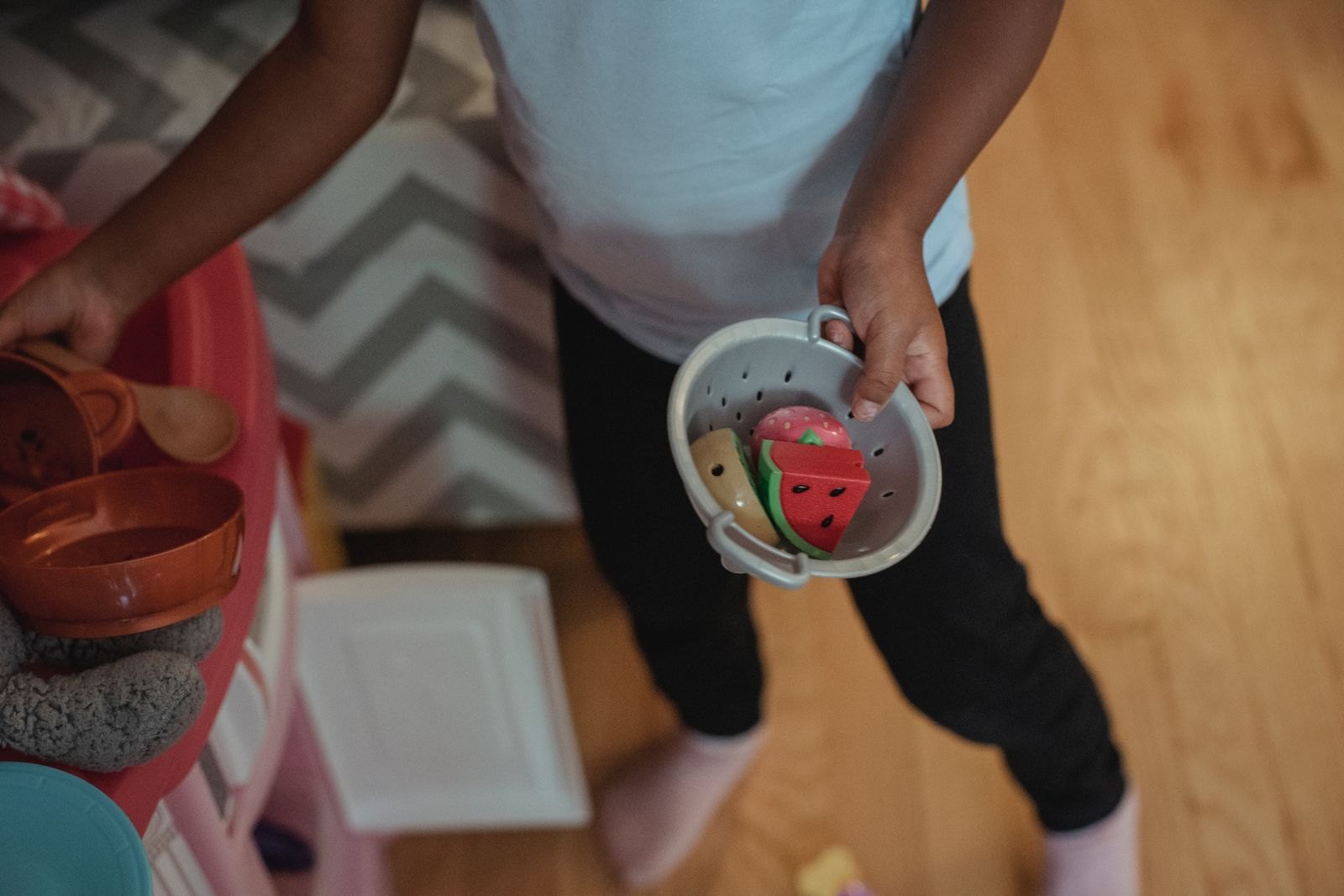
A pretend kitchen does not require a large play unit. A low shelf used appropriately, a suitable table or a small basket of props can support the same kind of imaginative cooking. Start with the space you can spare without blocking the room's ordinary use.
Choose a few sturdy, age-appropriate pretend items. A bowl, a spoon and large toy food pieces may be enough. Do not use real sharp tools, appliances, medicines or chemical containers as props. Household objects should be checked for suitability rather than assumed safe because adults use them every day.
Let the play define the equipment
Watch what the child wants to do. Someone who likes serving imaginary soup may need bowls and a place to set them more than an elaborate pretend oven. Another may be interested in taking orders and making a menu.
Keep the setup at a level that does not encourage climbing. Secure furniture as required by its instructions and keep the play area away from real cooking hazards. A pretend kitchen should not invite a child into the working area around a hot stove.
Keep real and pretend ingredients distinct
Using toy or imaginary food avoids the mess and storage questions that come with real ingredients. If you choose an actual food activity on another occasion, treat it separately with appropriate supervision, hygiene and attention to allergies and choking risks. Do not leave food in the play setup between sessions.
Children can invent dishes that do not make culinary sense. A bowl of imaginary clouds or a sandwich for a dinosaur is part of the game. Adults can join as customers without directing every choice toward a lesson about healthy eating.
Give the props a short route home
Store the small collection together, with unsuitable pieces inaccessible to younger siblings. Review damaged items and remove them rather than letting a pretend cupboard become a place where broken toys accumulate.
If the area stops being used, reduce the contents or move the basket to another suitable space before buying more accessories. The attraction may lie in playing near an adult rather than in the quantity of equipment. A small setup that can move with the household's routines may earn more use than a larger one in an inconvenient corner.