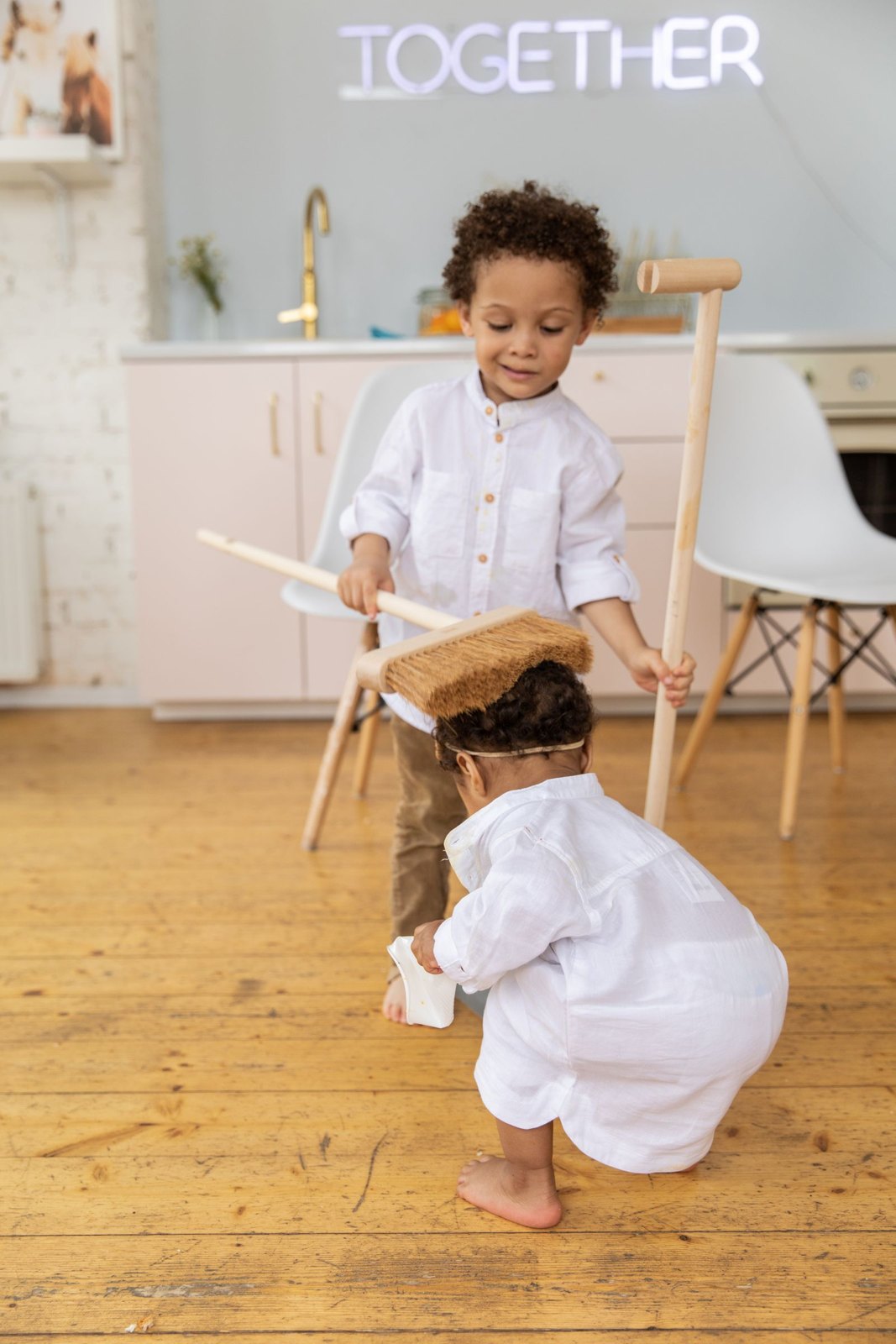
A chore can be difficult to begin because the instruction is too large. Clean your room may contain sorting, deciding, carrying and putting away, with no obvious starting point. Break the job into an action the child can recognize and complete with the support they need.
Start with a task suited to the child's age and abilities. Show the relevant tools and where the result belongs. Keep hazardous products and equipment under appropriate adult control; involving a child in household work does not mean giving access to every cleaning item.
Teach a visible beginning
For putting laundry away, begin with one category and one drawer. For clearing a table, explain which items the child can carry and where they go. Work alongside them initially rather than watching a struggle and repeating that they should know by now.
Make the environment support the task. A child cannot easily put toys away if the storage is full or categories are unclear. Remove unnecessary decisions and choose containers they can use safely. The household may need less stuff or a simpler arrangement before it needs stronger reminders.
Choose a predictable moment when possible, such as after a meal or before starting another activity. Explain the sequence without making the chore a surprise interruption every day. A brief reminder can point to the agreed task rather than reopening whether it exists.
Agree on what finished means
An adult's idea of tidy can be much more detailed than the child's. State the important result and accept an age-appropriate version. If a specific safety or hygiene step matters, teach it explicitly. Do not silently redo everything and then complain that the child never contributes properly.
Notice the actual contribution: the table is ready for the next meal, or the towels are where people can find them. Payment or rewards, if used, should be an intentional household choice rather than a new negotiation each time the task begins.
Review a chore that repeatedly stalls. It may need a smaller first step, different timing or more support. The aim is a growing ability to contribute, not a daily contest over whether the child can complete an adult-sized job without help.