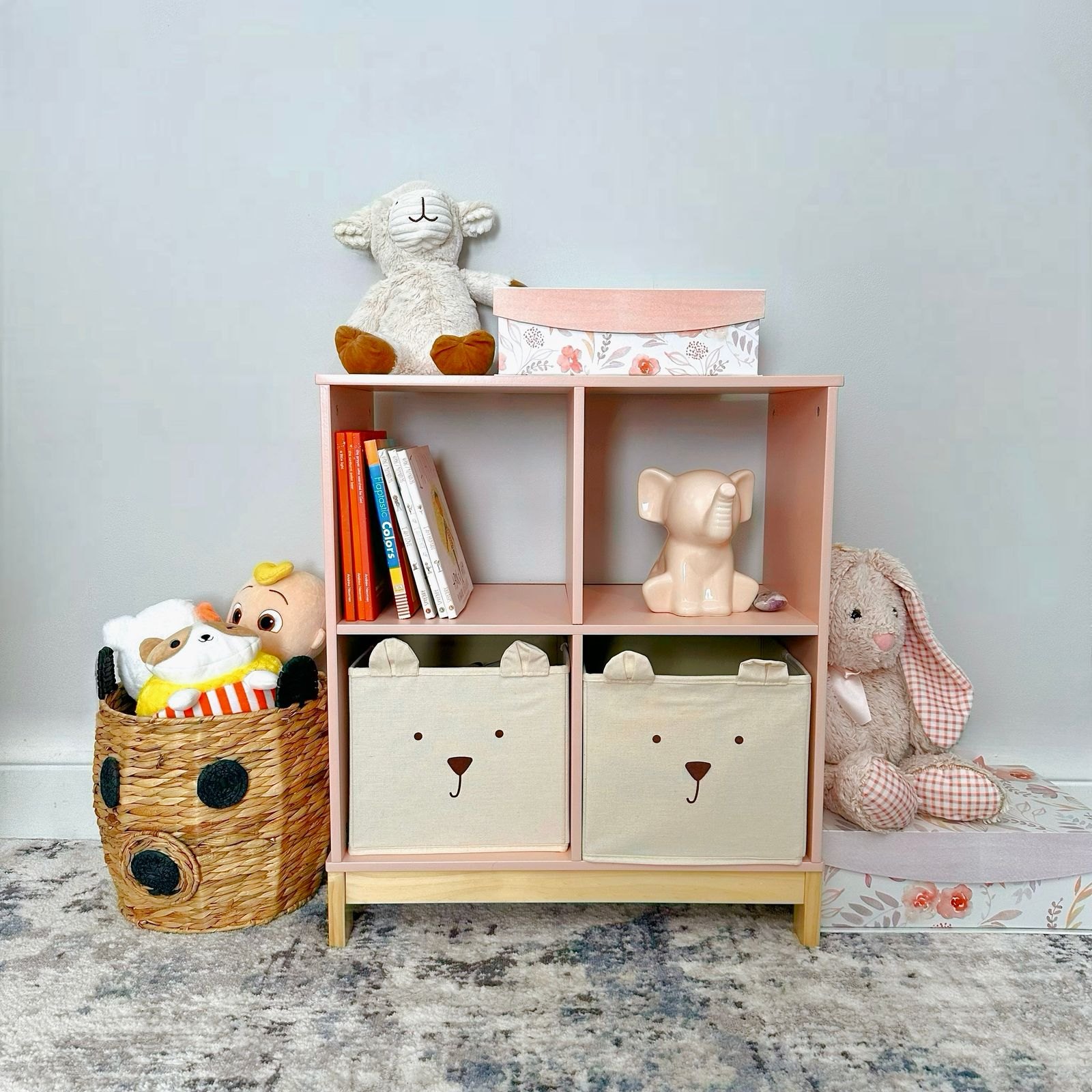
Toy storage is easier to use when returning an object takes little interpretation. If every tiny category has its own label, a child may need an adult to explain the system each time. Start with broad groups that match how the toys are used: building pieces, pretend-play items or a few favorite vehicles.
Sort before choosing containers. Remove broken or unsuitable items from use and keep age-inappropriate small parts away from younger children. Check relevant product instructions and recalls when needed. Storage should support safe use, not hide a problem inside a matching bin.
Let the container explain the task
A shallow open container can make suitable everyday toys visible and easy to return. Choose designs without problematic lids, sharp edges or other hazards for the children using them. Do not assume a large heavy chest is the best choice simply because it holds everything.
Place appropriate frequently used toys where children can reach them without climbing. Anchor furniture and televisions as recommended by the manufacturer and CPSC; placing heavy objects low does not replace anchoring. Avoid putting attractive toys high on furniture where they may encourage climbing.
Pictures or a small number of labels can help, but they are optional. If the blocks always go in one recognizable basket, another sign may add nothing. The goal is a clear destination, not a fully labeled room.
Keep cleanup within reach
Offer a concrete task such as put the cars in this box rather than tidy everything. Adults may need to help according to the child's ability and the amount of play involved. A system that requires careful stacking or sorting by color may look neat but demand more effort than the household can sustain.
For shared spaces, keep only the toys used there and give larger collections another suitable home. If rotating toys, store the unused items safely and keep track of what is available. Rotation should simplify access, not create a new schedule someone must maintain perfectly.
Watch what children actually return successfully. Merge categories that are consistently mixed and change a container that is too difficult to open or carry. A useful toy system becomes familiar through ordinary use rather than through repeated lectures about where each item belongs.
For example, a child who builds with large blocks may manage one open container easily but struggle with separate boxes for each shape. Another child may want a small project kept intact while the spare pieces are put away. Those are different needs. A safe place for the current project and one container for the remaining blocks can serve both without requiring detailed sorting after every play session.